

curious.
Curious about how people truly live? Discover breathtaking spaces and gain insider design knowledge from leading experts.
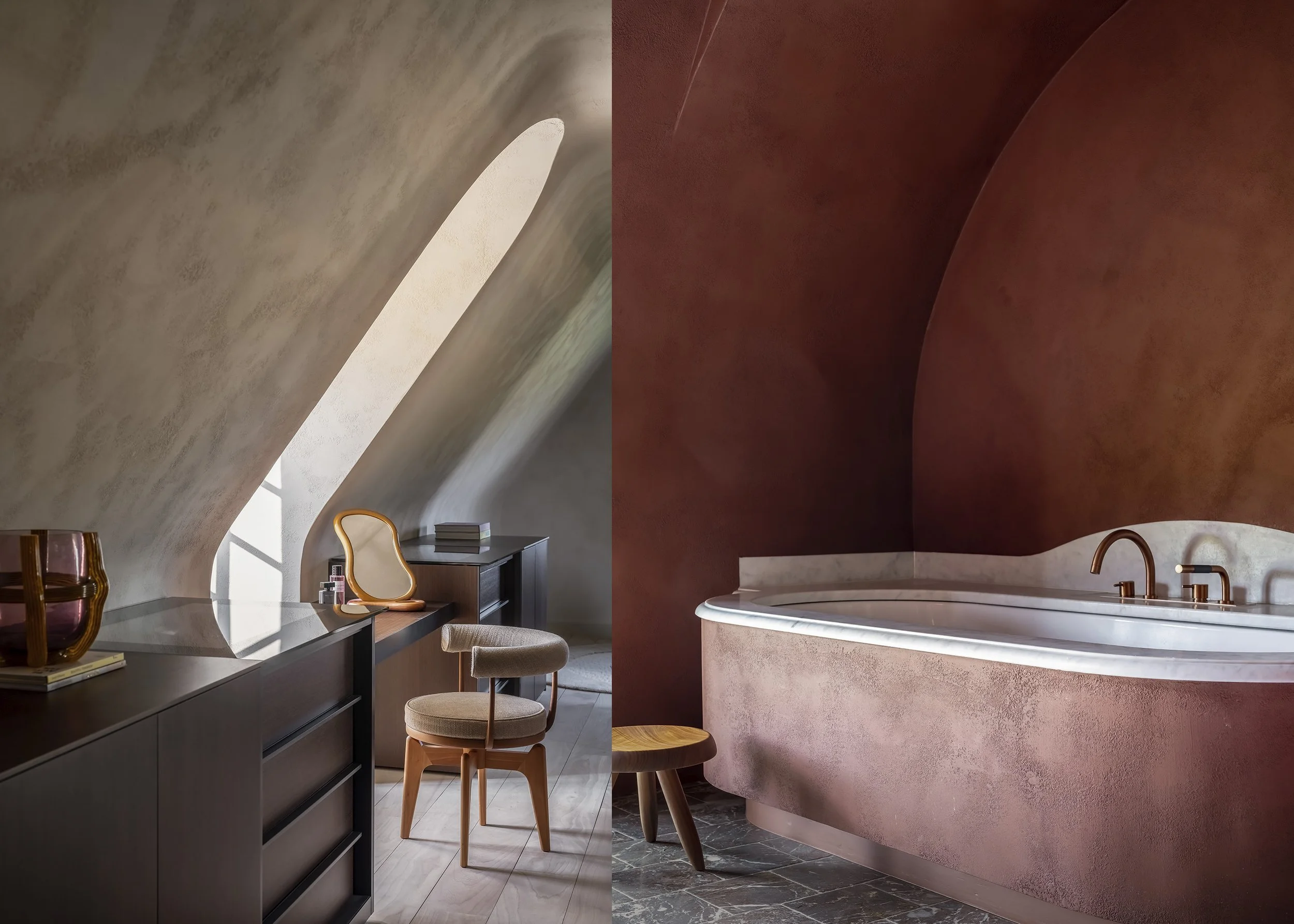
LANGUAGE OF CURVES
Behind the familiar silhouette of a Flemish farmhouse, Van Damme – Vandeputte Architects compose an interior where rounded forms, textured plaster, expressive marble and soft northern light reshape the experience of home.
A story about geometry, craftsmanship and the beauty of restraint.
Vandeputte architects. Photography: Cafeine. Source: Savvy.
Belgium has long been defined by architectural restraint. Brick farmhouses, muted landscapes and overcast skies create an environment where buildings rarely demand attention. Beauty reveals itself gradually, often hidden behind familiar façades.
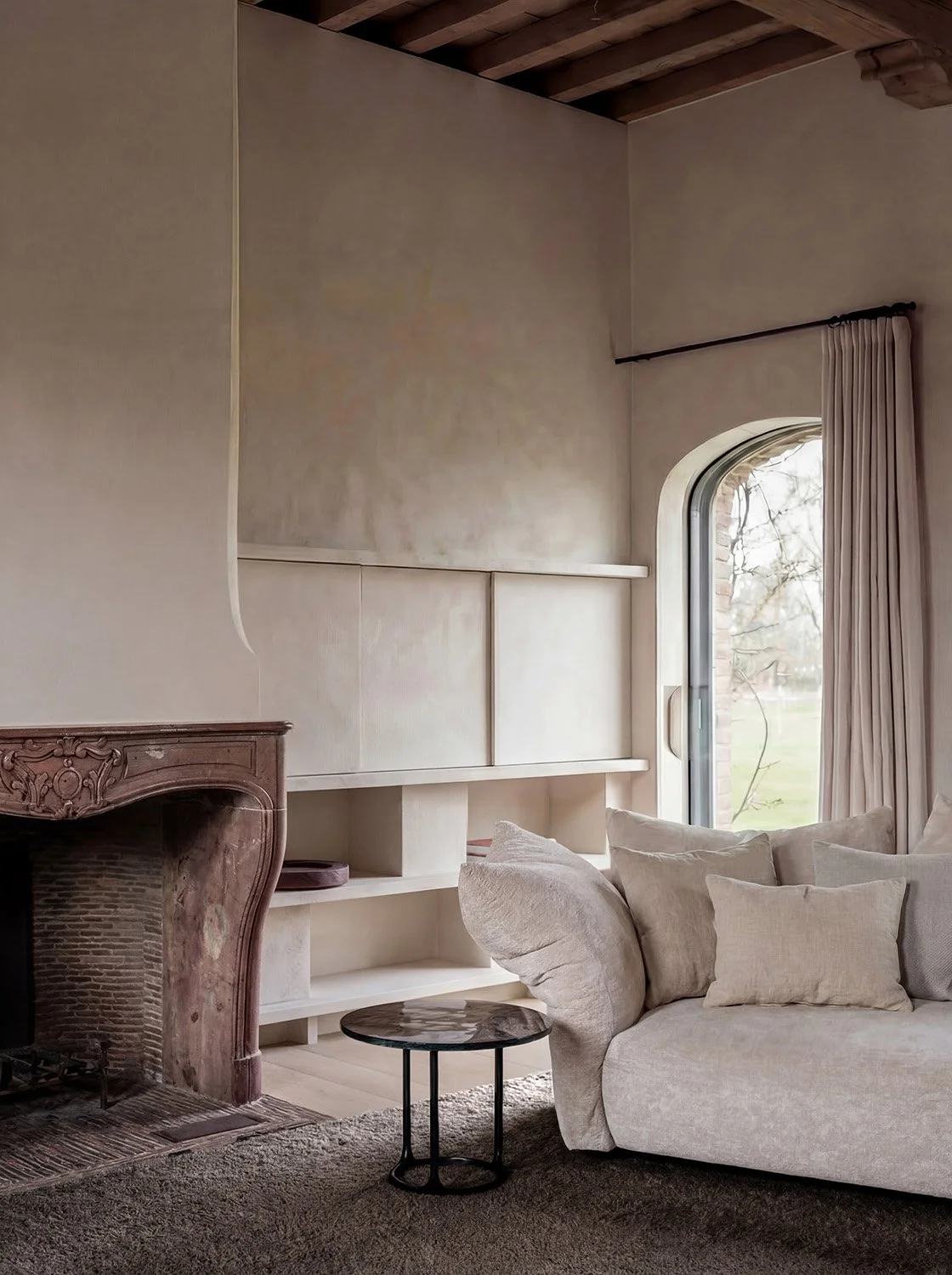
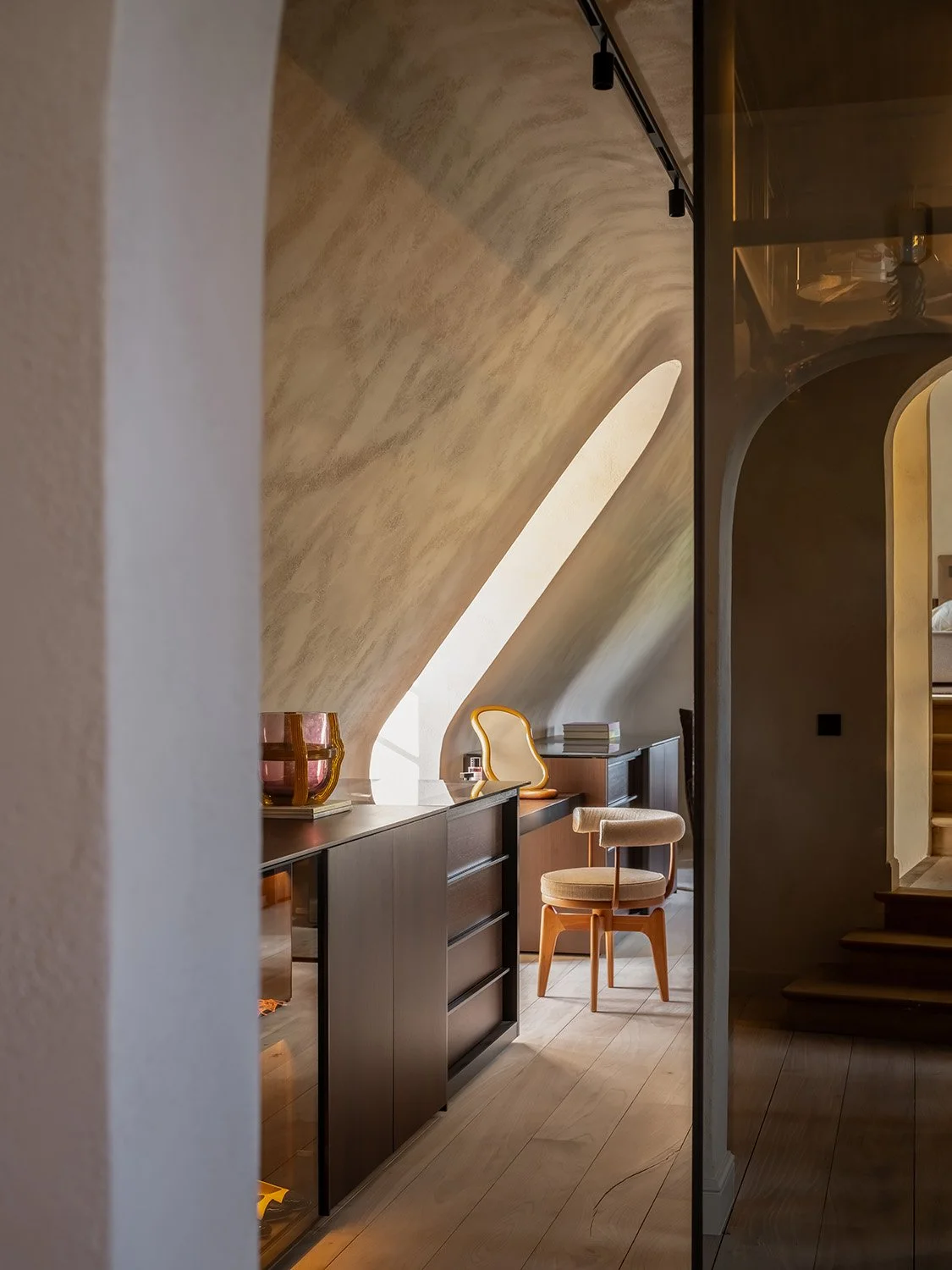
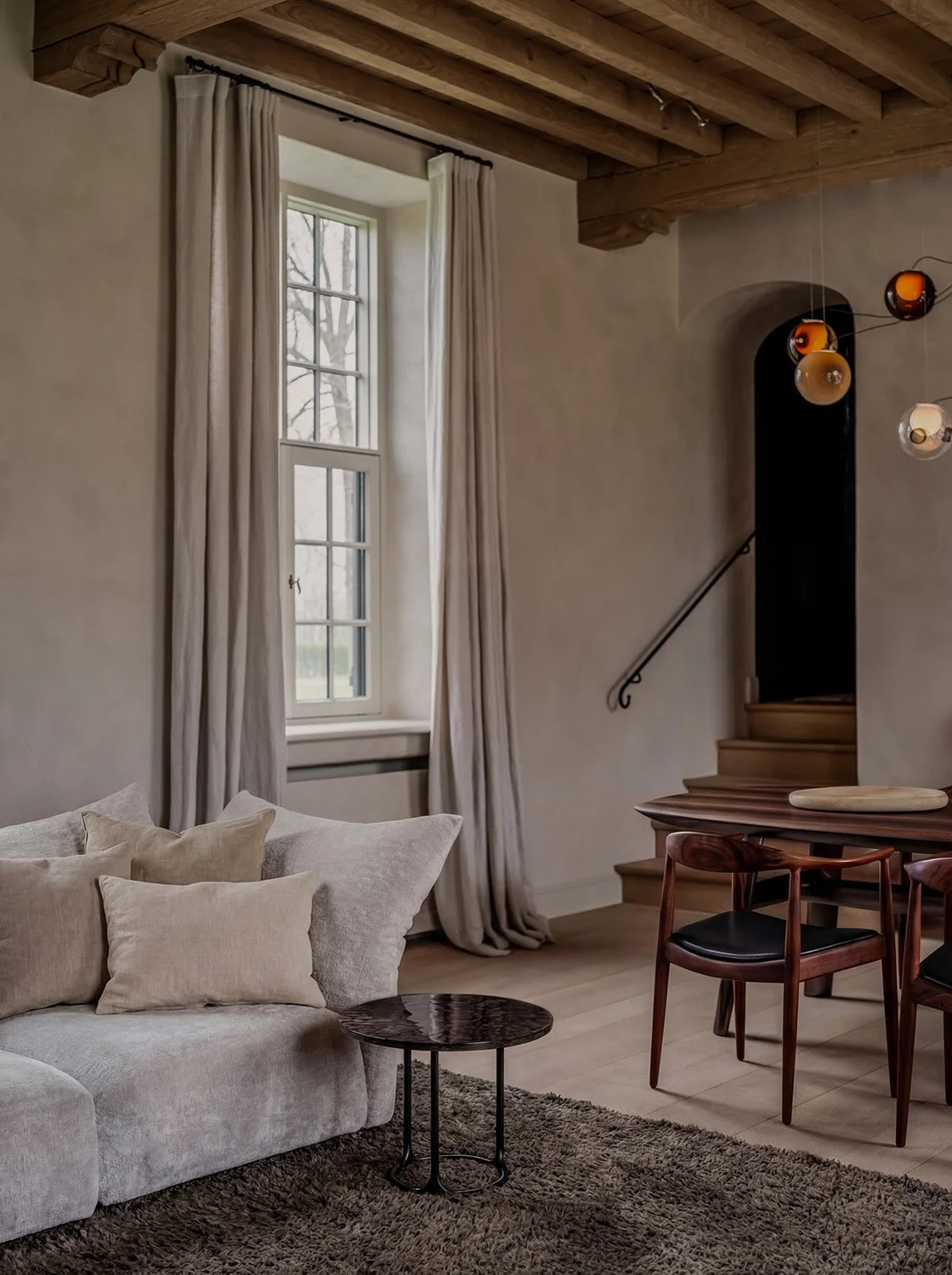
House DM follows that tradition—until the moment you step inside. For this historic farmhouse, Van Damme – Vandeputte Architects have composed an interior where curves become the project's defining language. Rather than introducing dramatic architectural gestures, the Belgian studio softens the existing structure through a continuous sequence of rounded openings, sculpted plaster walls, generous vaults and elliptical skylights that transform the experience of moving through the house.
Vandeputte architects. Photography: Cafeine. Source: Savvy.
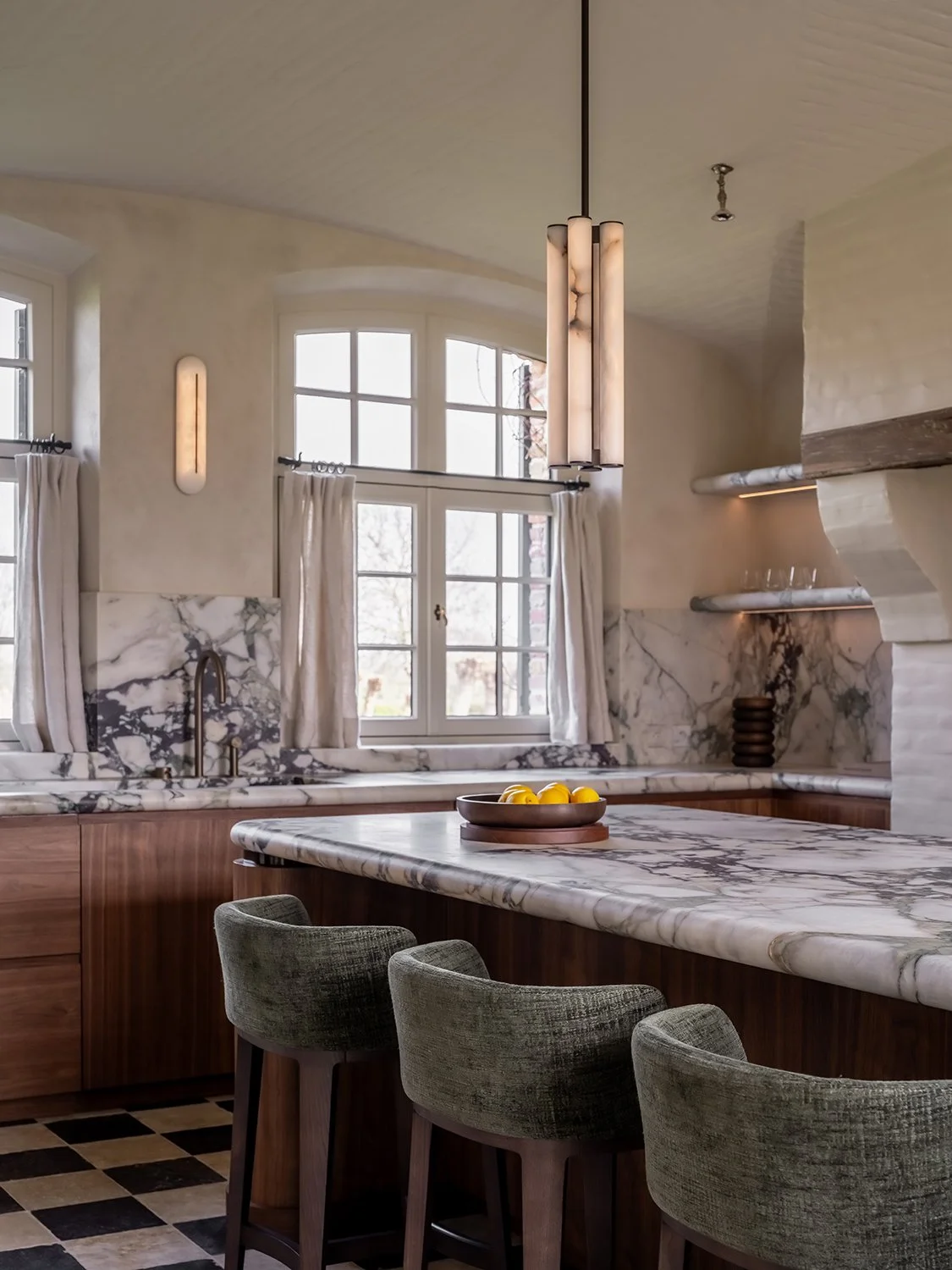
Geometry replaces ornament. Almost every transition is softened. Marble countertops curve gently at their edges, kitchen islands become monolithic forms with rounded corners, windows are framed by deep reveals and thick plaster walls dissolve into one another without abrupt lines. The result is an architecture that feels less constructed than carved, where every surface invites both light and touch.
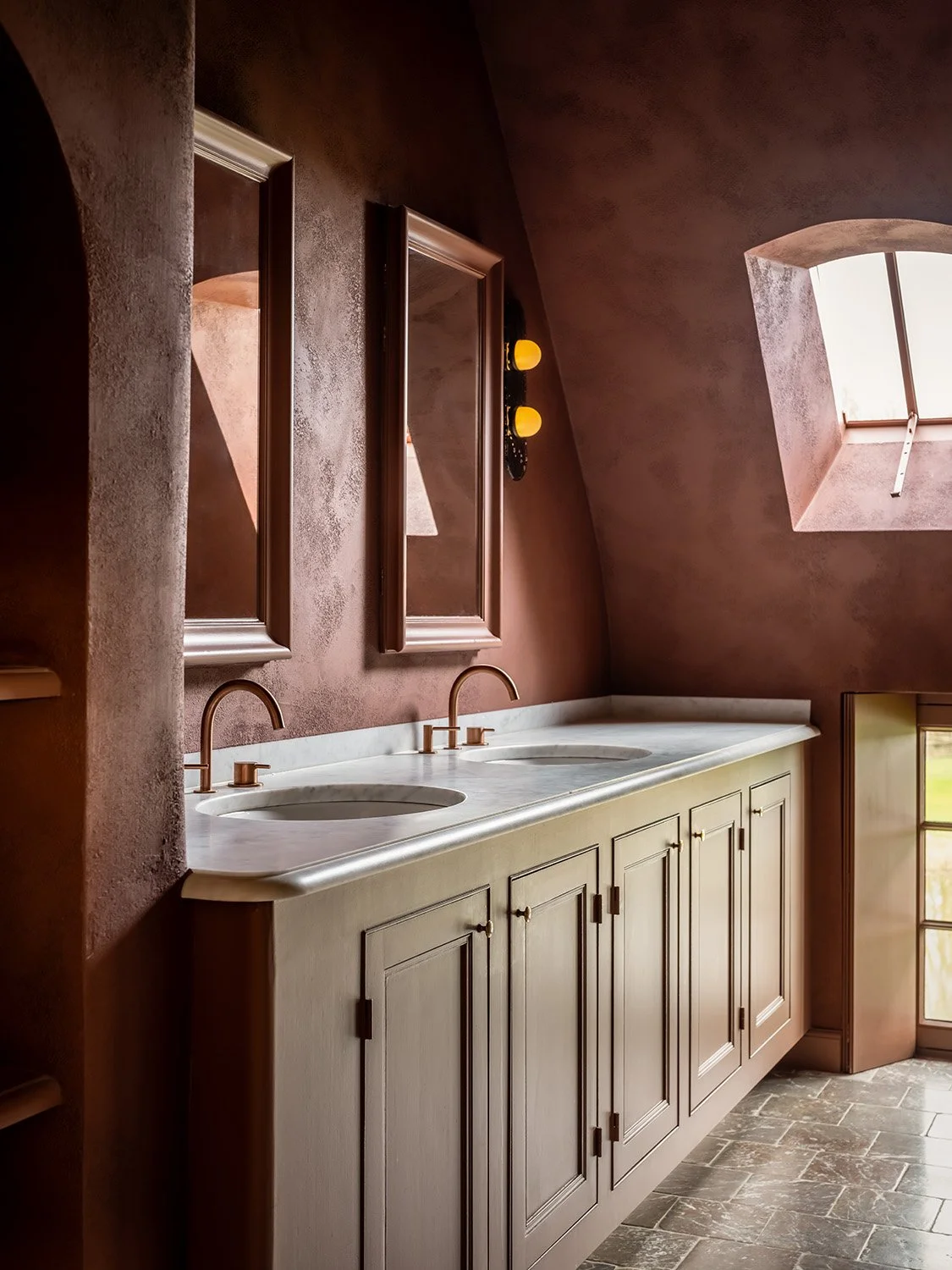
The material palette reinforces this sense of continuity. Expressive marble stretches across walls and worktops like geological landscapes, contrasting with the warmth of dark walnut cabinetry and the quiet presence of brushed bronze. Hand-applied plaster introduces subtle variations that shift throughout the day, while linen curtains diffuse the northern light into a soft, almost atmospheric glow. Rather than decorating the rooms, the architects allow texture itself to become the protagonist.
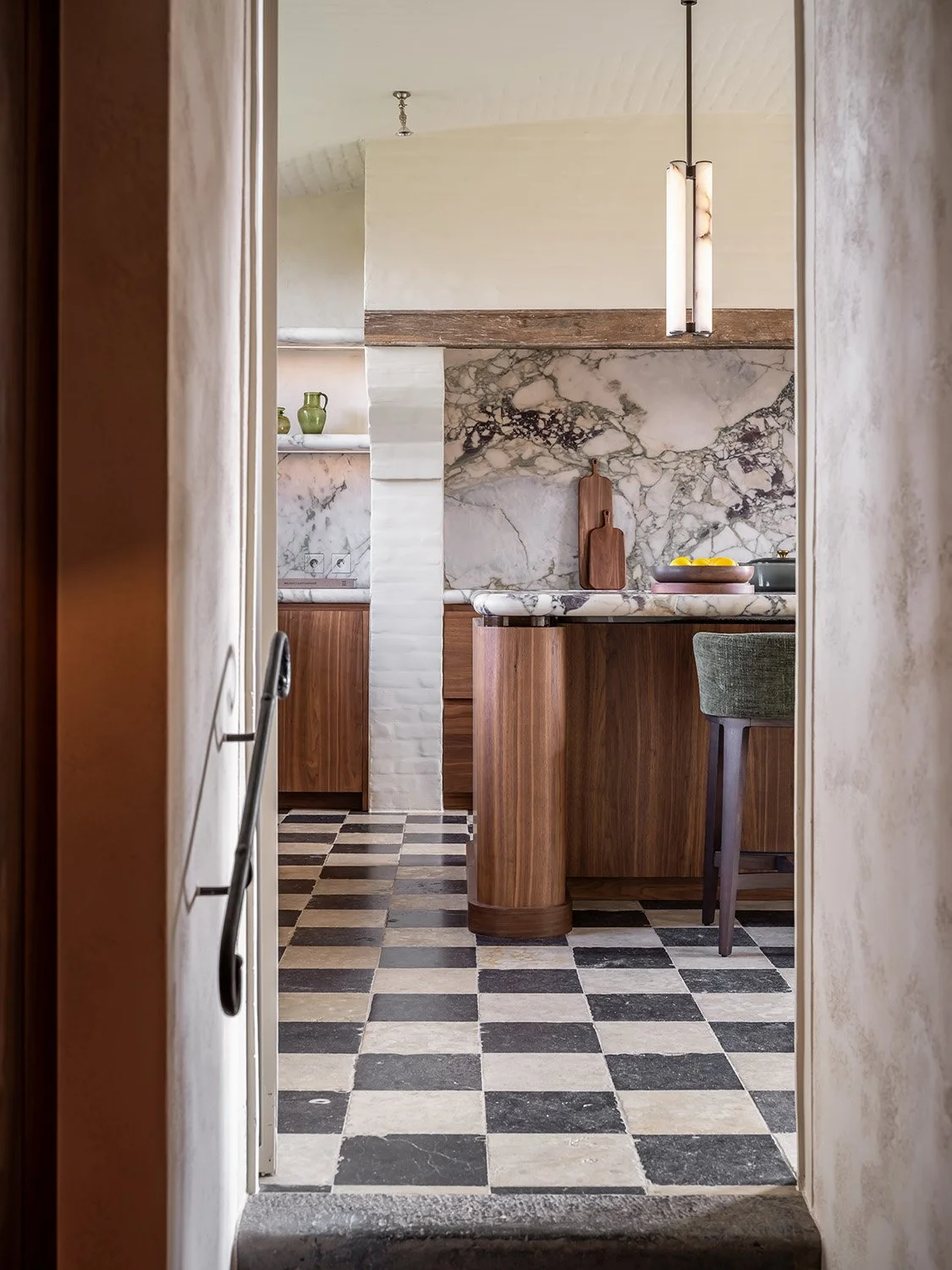
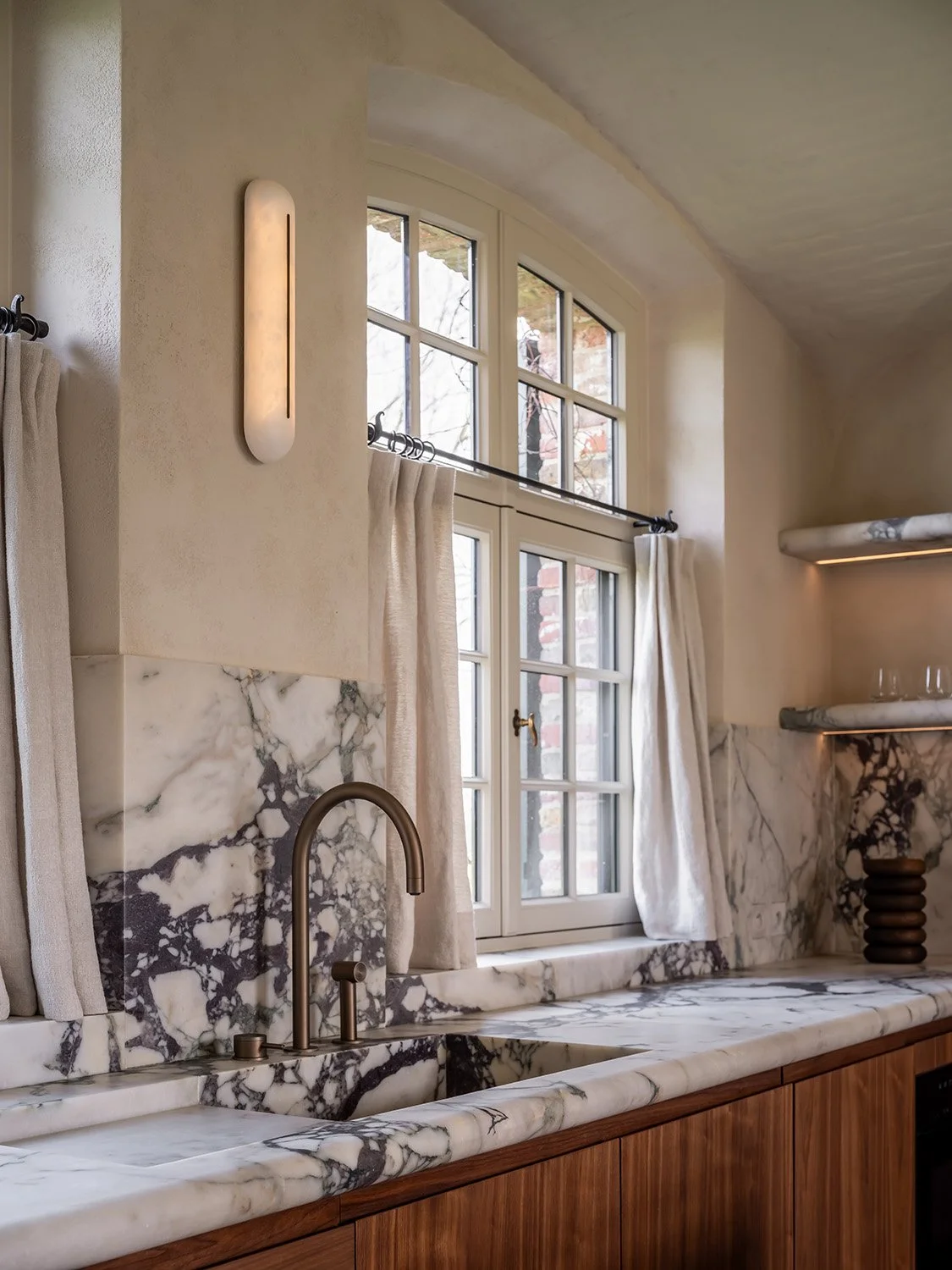
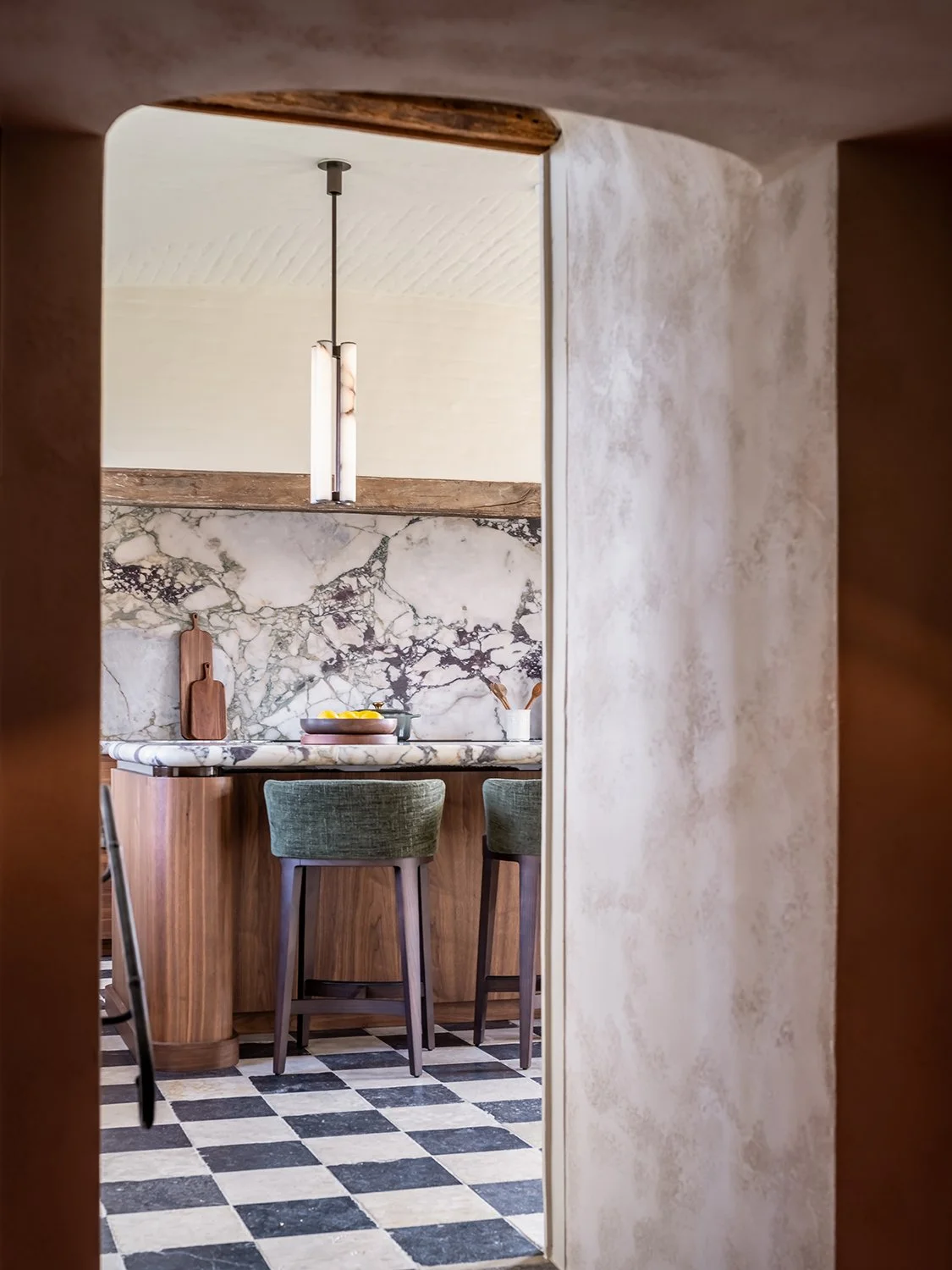
The kitchen emerges as the centre of this composition. More sculptural object than functional workspace, it is anchored by oversized slabs of stone whose dramatic veining balances the restrained geometry of the surrounding architecture. Everything feels substantial yet remarkably calm.
Light completes the narrative. Throughout the house, daylight is carefully filtered through arched windows, elongated skylights and thick walls, revealing the tactile quality of every surface. Circulation spaces become moments of discovery, framing views that slowly unveil marble, timber and plaster instead of presenting them all at once.
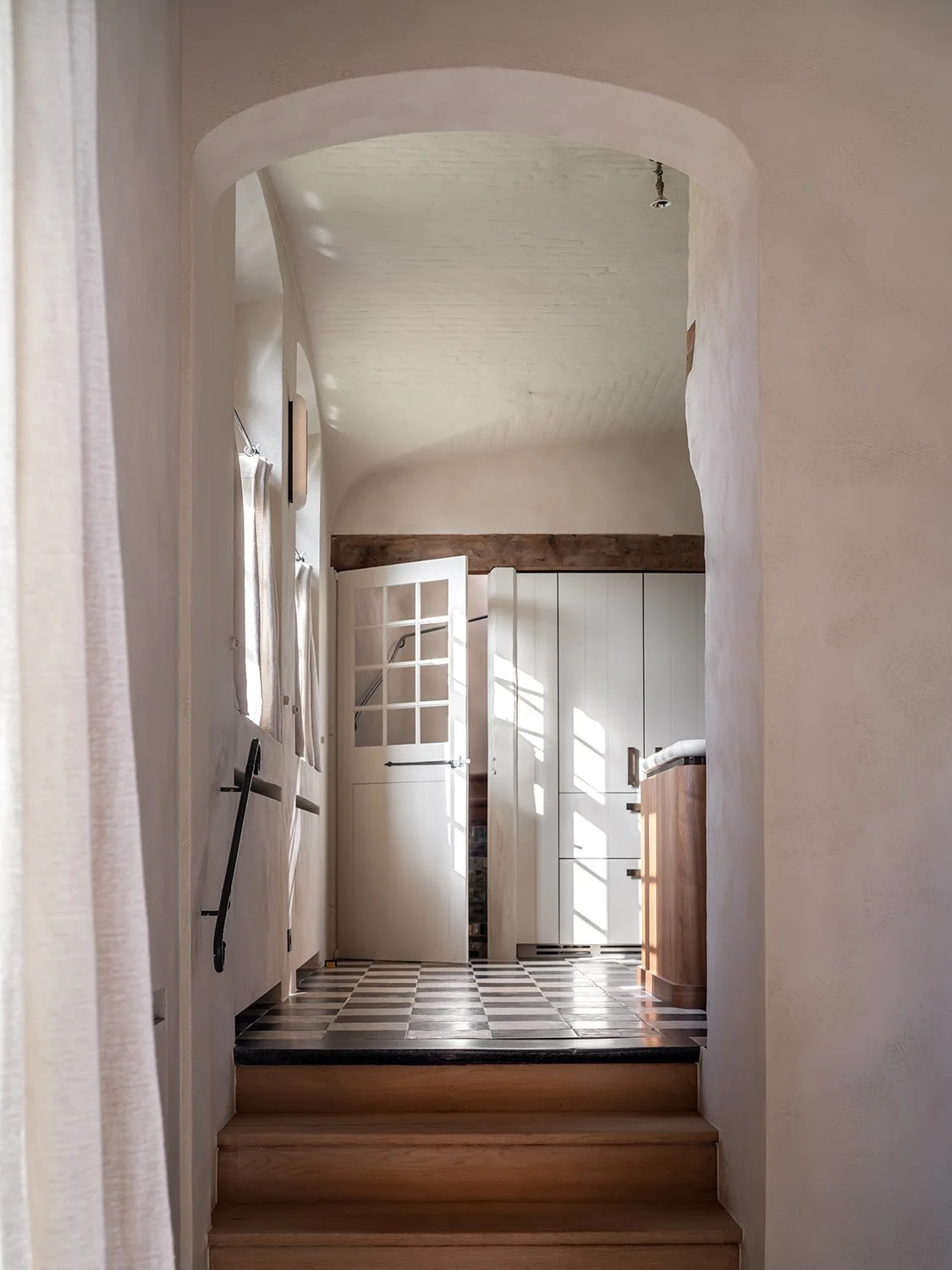
Vandeputte architects. Photography: Cafeine. Source: Savvy.
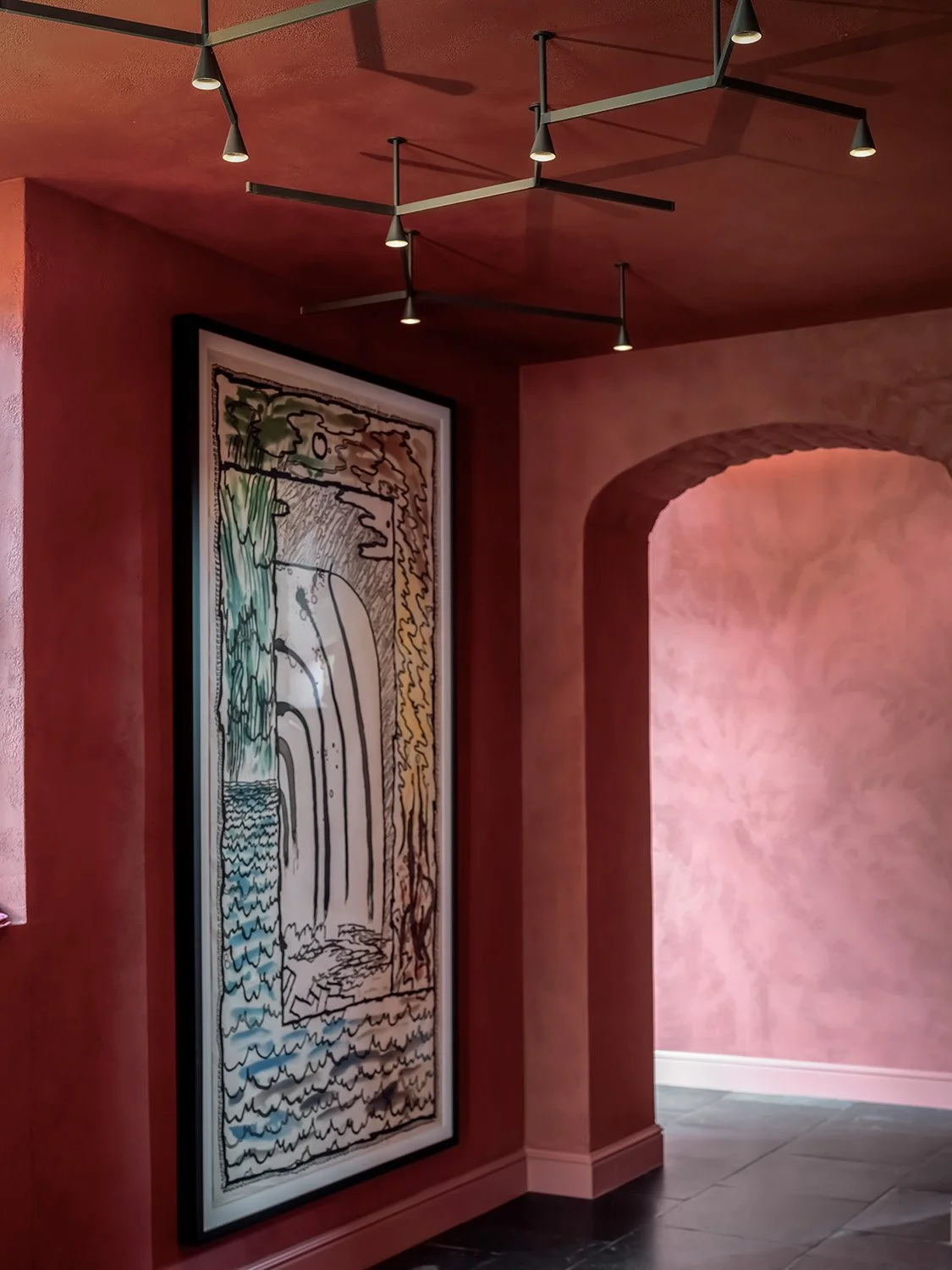
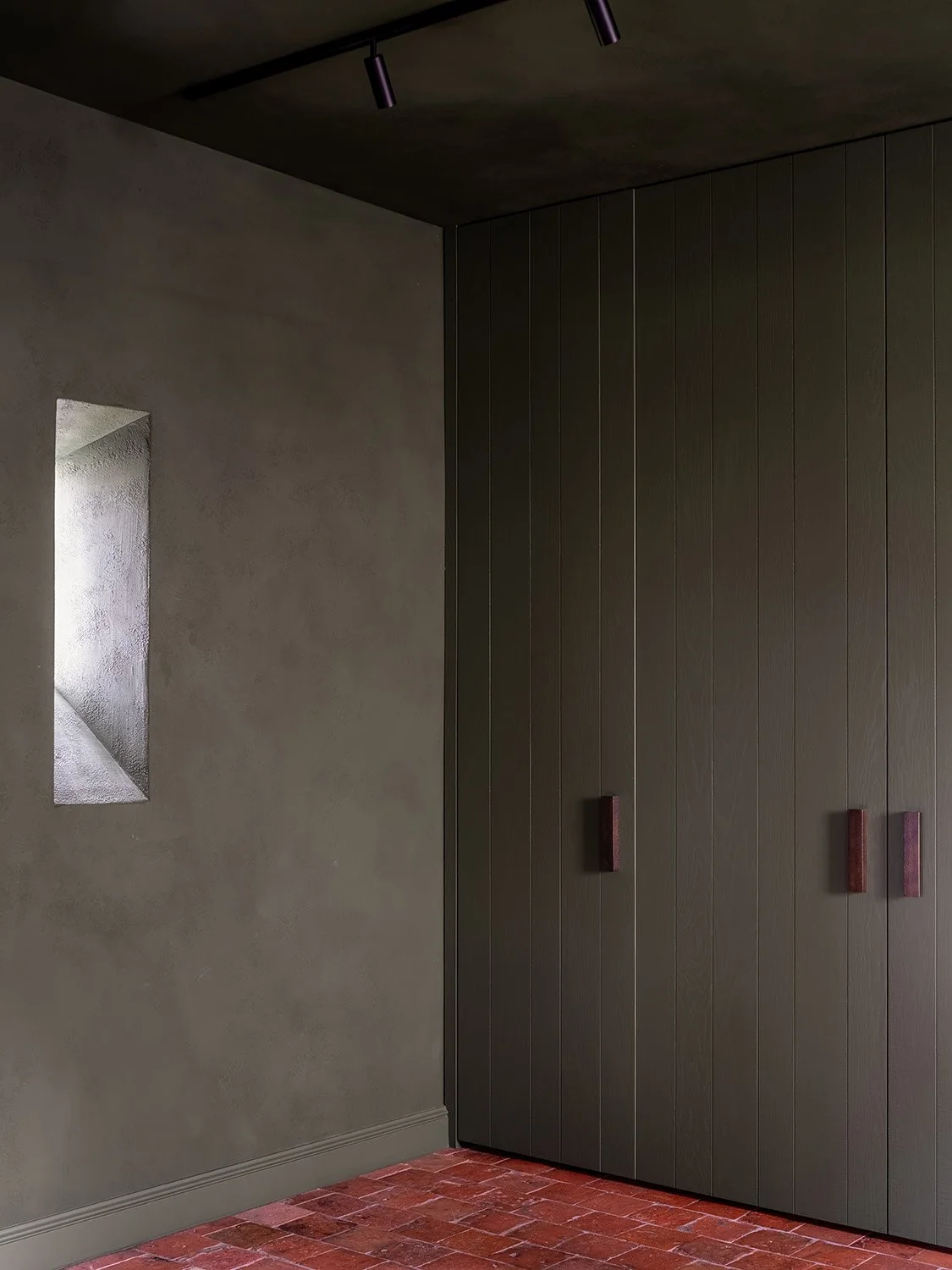
Then, the atmosphere shifts. Descending below ground, the same architectural vocabulary is reinterpreted through colour. Curved ceilings and rounded walls remain, but now they are wrapped in mineral shades of terracotta, burgundy and dusty rose. The change feels immersive rather than abrupt, creating spaces that are theatrical without abandoning the project's underlying sense of restraint.
What Van Damme – Vandeputte Architects achieve is not simply the renovation of a historic farmhouse, but the creation of a coherent architectural language. One where curves soften history, materials shape atmosphere and light becomes the final building material. In a country celebrated for the quiet dignity of its architecture, House DM reminds us that the most memorable spaces often whisper rather than shout.
Designing the Unseen
Trained between New York, Miami, and Bogotá, Santiago Peraza has built a practice where interiors, light, and experience operate as a single system. Rather than producing spaces, his work is concerned with calibrating how they are perceived, moved through, and ultimately inhabited.
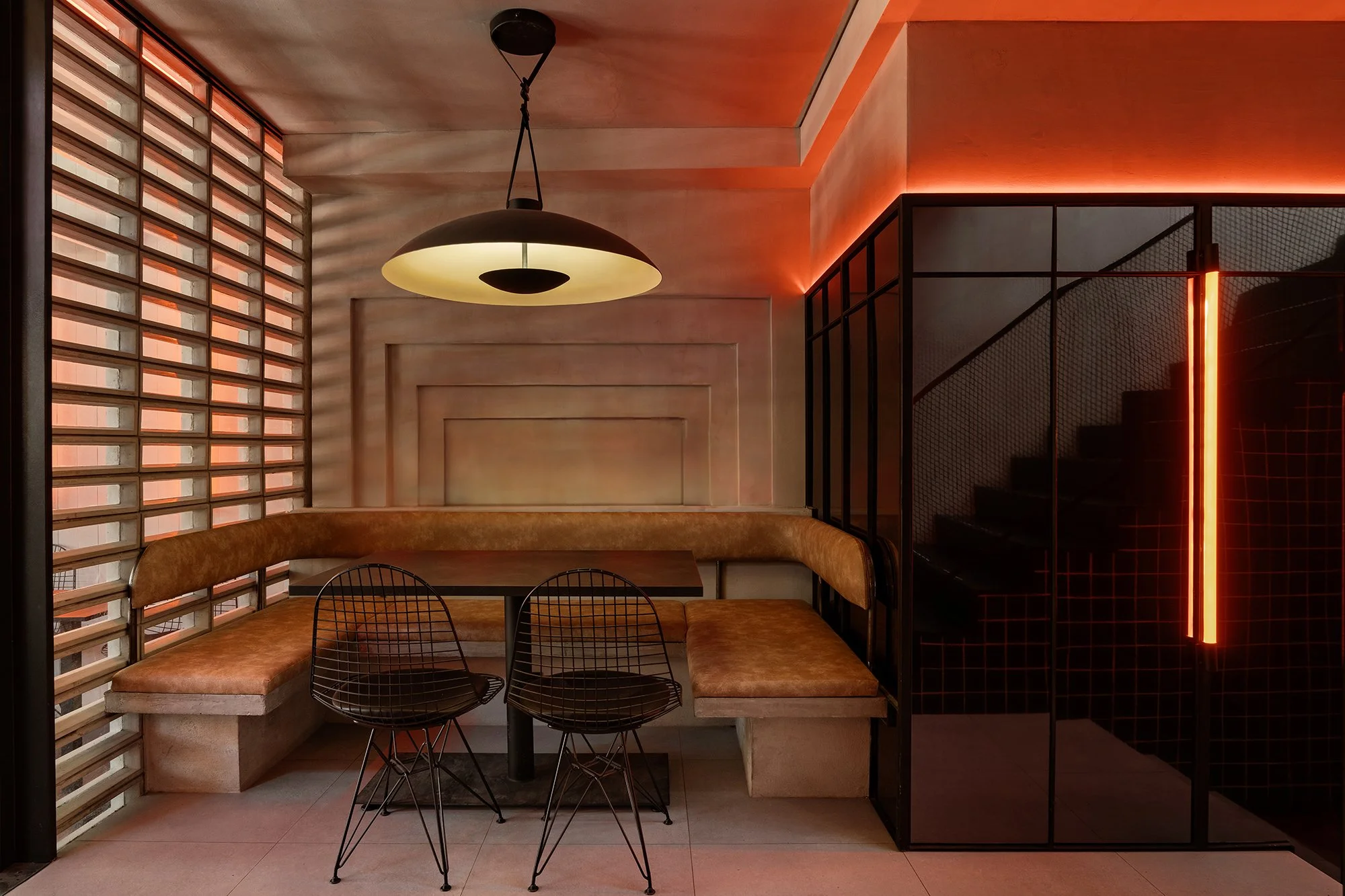
Bicono. photo: Tragaluz
Trained between New York, Miami, and Bogotá, Santiago Peraza has built a practice where interiors, light, and experience operate as a single system. Rather than producing spaces, his work is concerned with calibrating how they are perceived, moved through, and ultimately inhabited.
Peraza did not set out to become an architect. Born in Miami in 1986 into a family of architects, he spent years orbiting the discipline without fully claiming it—drawn instead to the broader territory of design: objects, atmospheres, and in-between conditions. When he enrolled at the Javeriana University in Bogotá, it was less a matter of calling than of positioning—an understanding of architecture as a platform from which to move across languages.
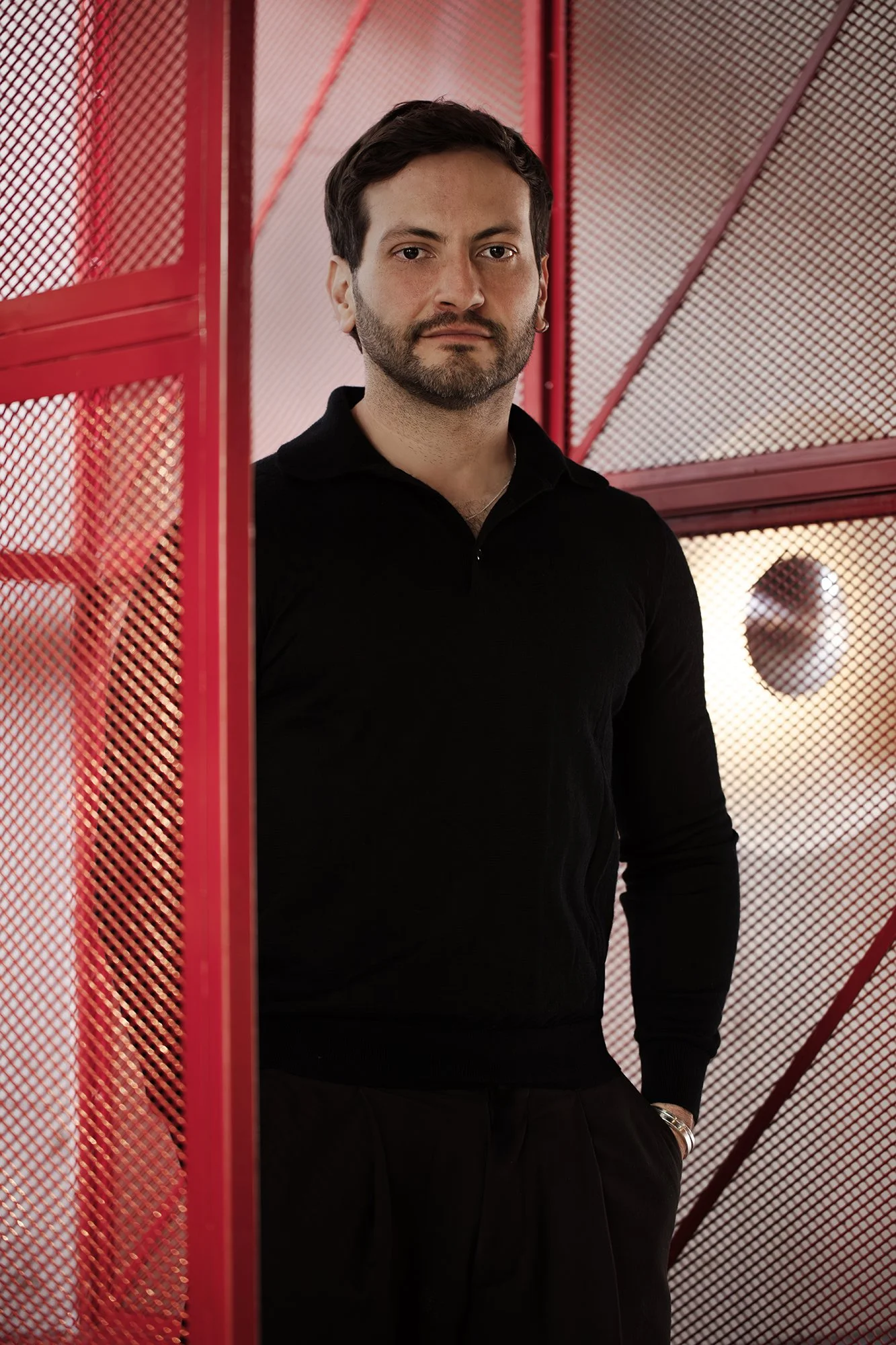
Architect Santiago Peraza
The shift came not in a classroom, but in Cartagena, during an academic project that asked him to design a hotel in a historic house. Until then, architecture had felt abstract, distant. Confronted instead with interiors—with atmosphere, with the way a space is actually lived—he understood that his interest lay not in the building as object, but in the experience unfolding within it.
That intuition shaped what followed. After an early stint in Miami at Kobi Karp, he moved to New York to study interior design at Parsons, entering a context where design operated with precision and intent. He worked first at Roche Bobois, then at Soho House under Vicky Charles, where he developed a method grounded in the control of detail, the calibration of light, and the quiet integration of the technical.
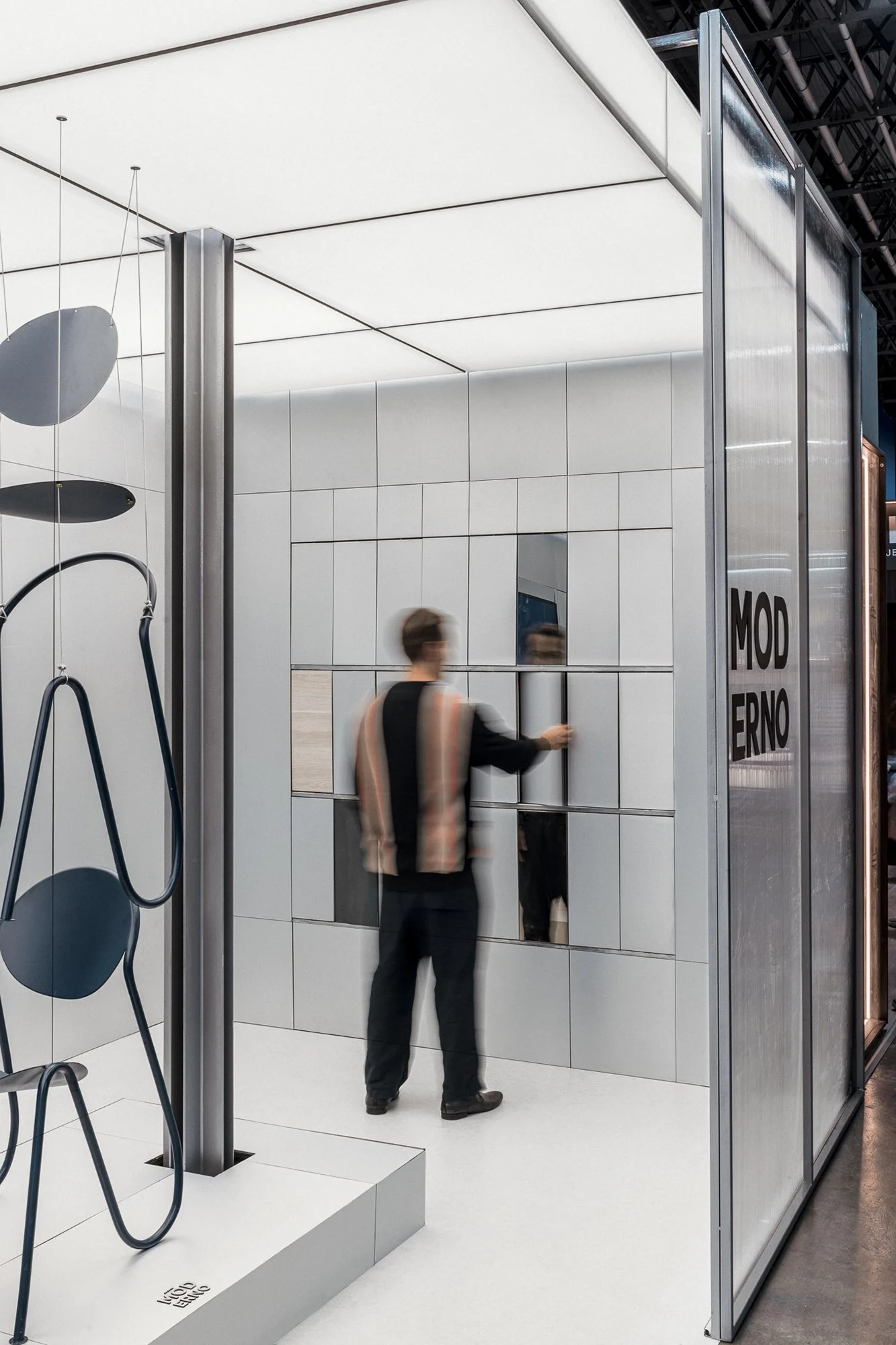
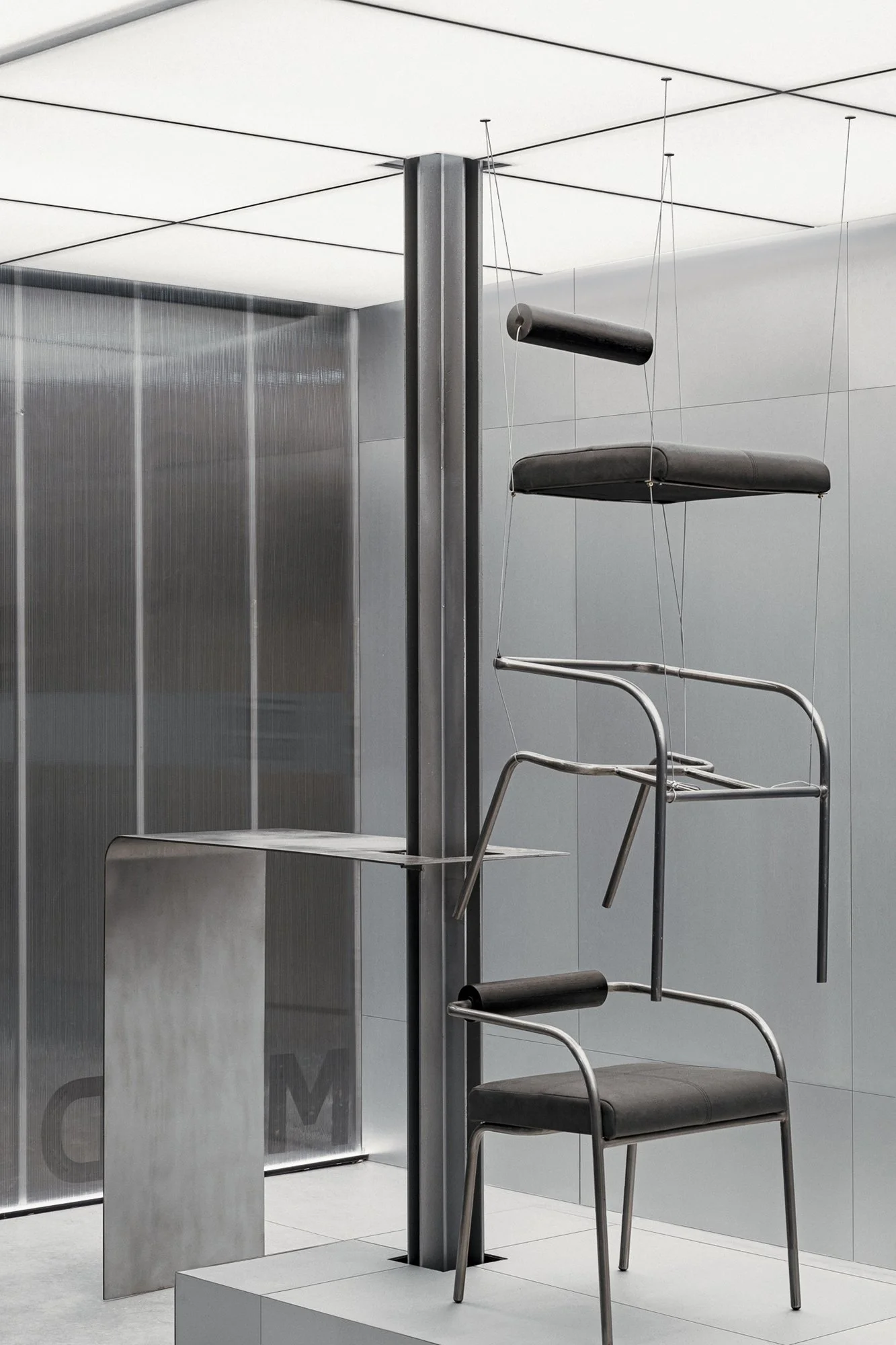
That rigor remains central to his work. After several years in New York, Peraza returned to Colombia in search of a more personal practice. The turning point came with Tremé, in Bogotá’s Quinta Camacho, where he assumed full authorship: space, furniture, lighting, atmosphere. More than a restaurant, it was a total operation—and the beginning of Studio Peraza.
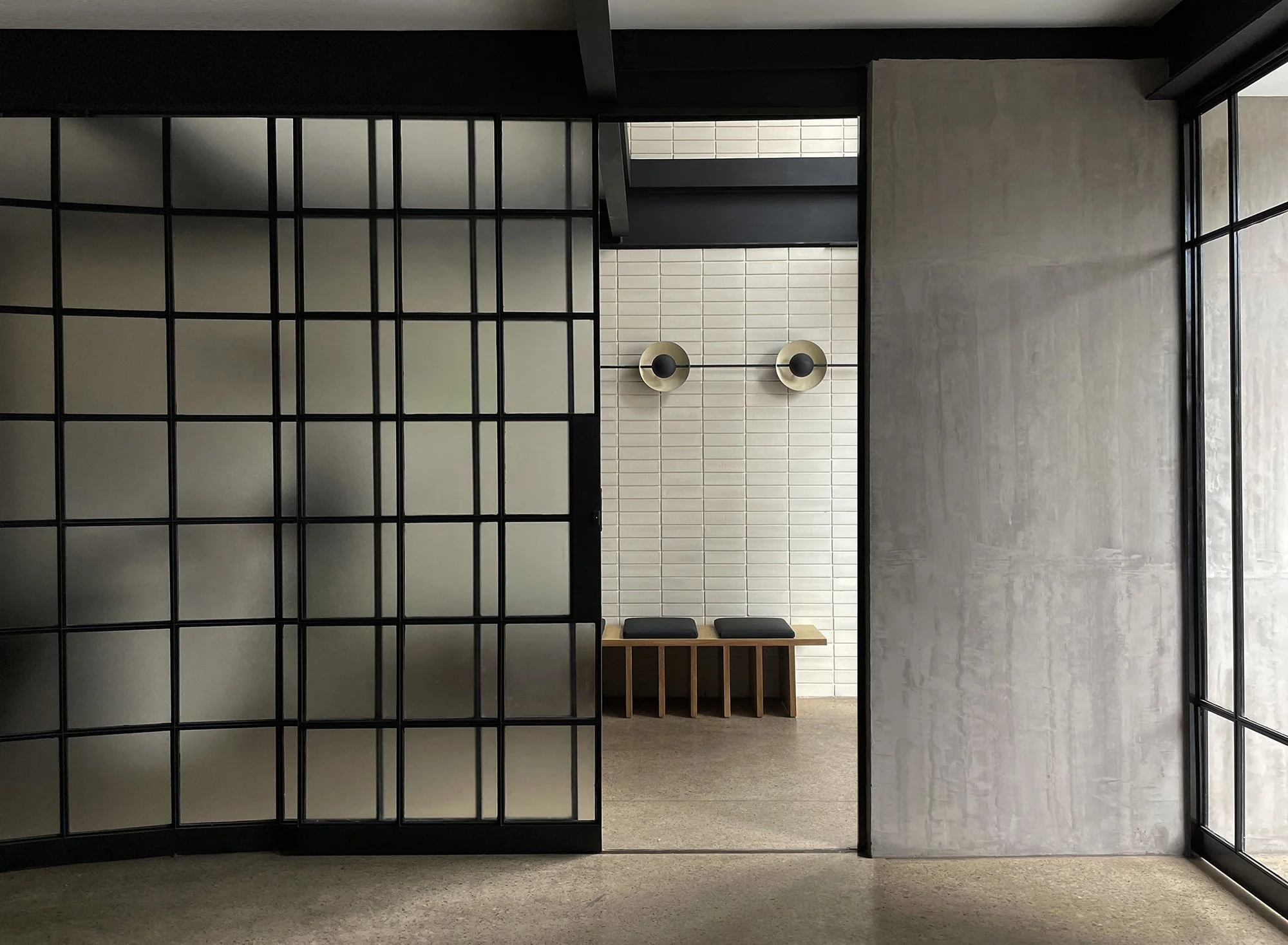
Photo: Tragaluz
More recently, his participation in Design House Colombia marked another inflection point. Working with glass, he produced a space that felt both exacting and immaterial, where every decision revealed a near-microscopic attention to detail. It read as a synthesis of his approach: matter, light, and atmosphere aligned with precision.
Light, in his work, is not additive but structural. It replaces generic solutions with indirect, integrated systems that shape how a space is perceived. This is evident in projects like Shio, in Santa Marta, set within a former gym. Rather than conceal constraints, he works through them: columns establish rhythm, level changes choreograph movement, and materiality builds a restrained reading that resists cliché.
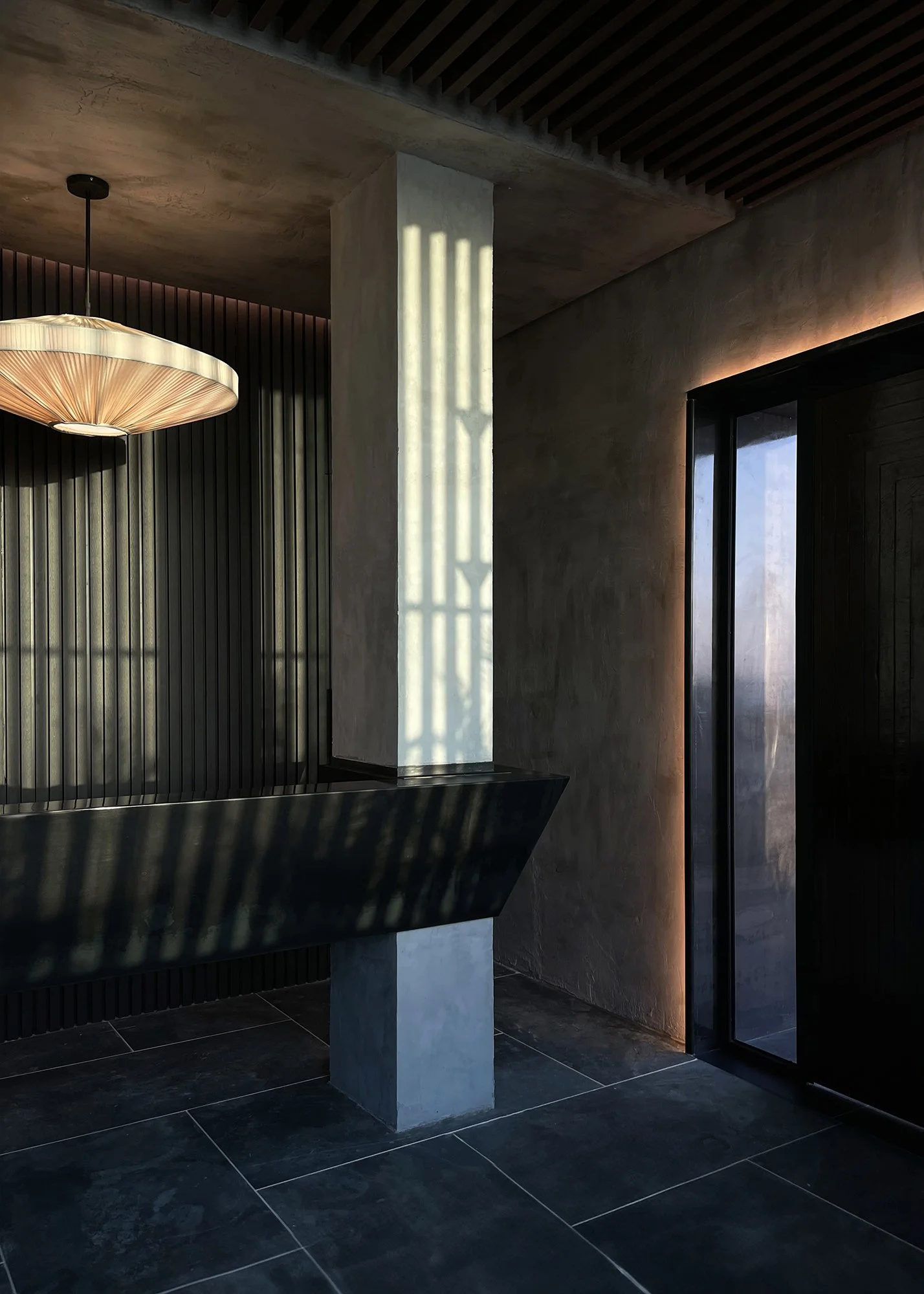
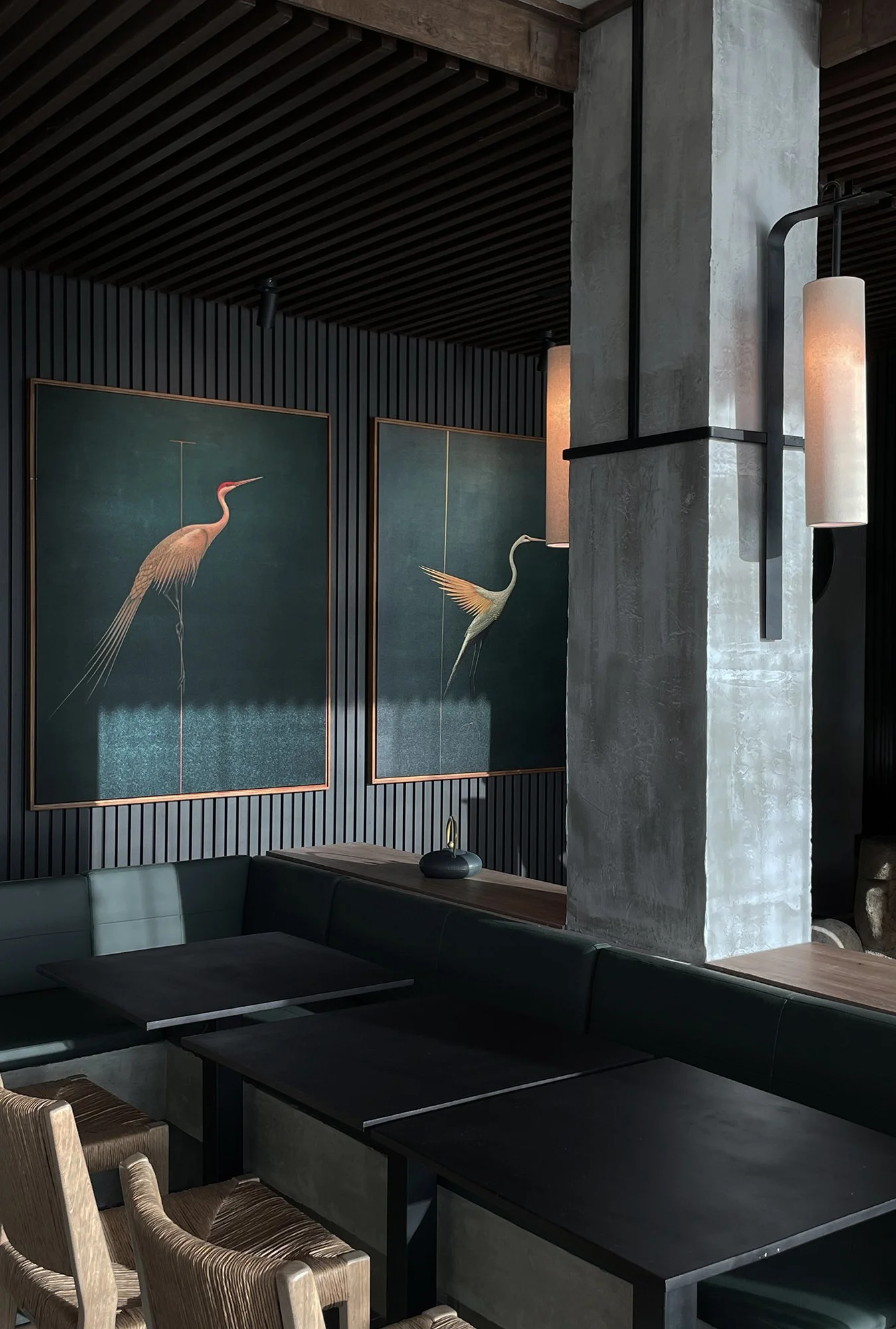
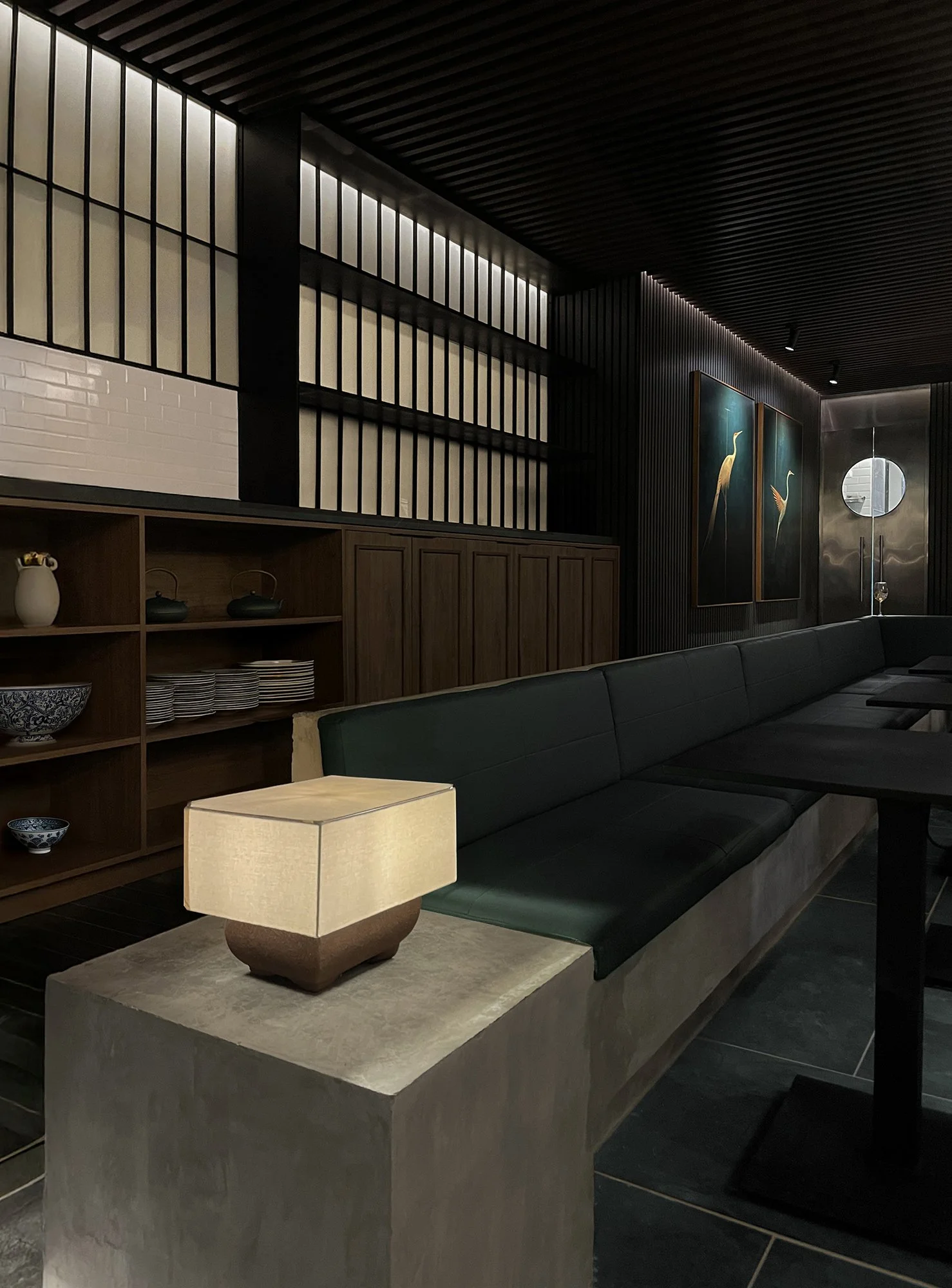
Each project begins with a careful reading of place, user, and intent. From there, the design expands into a complete experience—one that can extend from spatial strategy to elements as specific as tableware or sound. At Studio Peraza, architecture, interiors, and atmosphere are not separate disciplines, but parts of a single system.
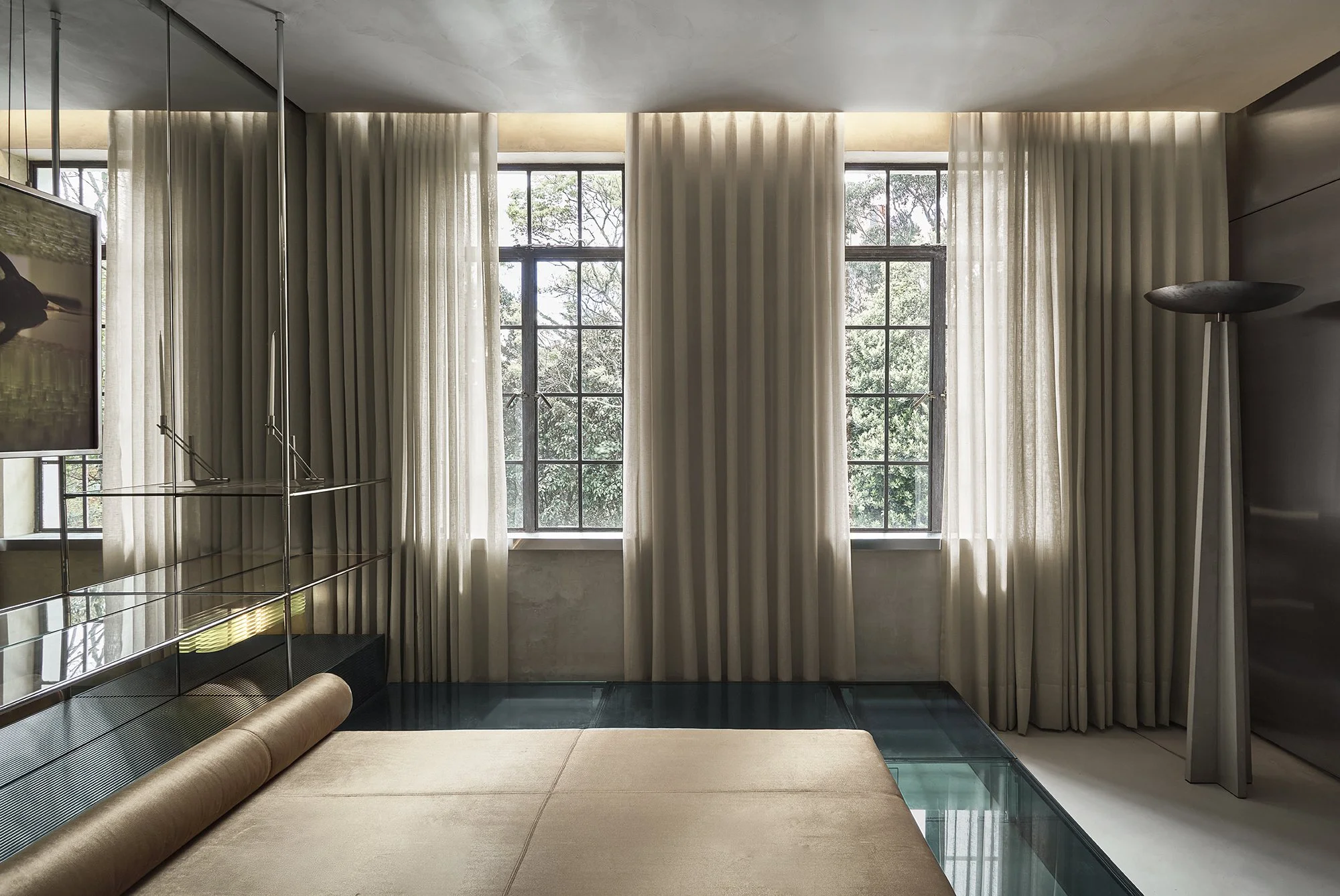
Design House Colombia 2025. Photo: Monica Barreneche
This approach positions him within a new generation of architects in Colombia—less invested in form as authorship, more in experience as outcome. His projects, often tied to hospitality, are not conceived as objects but as living environments.
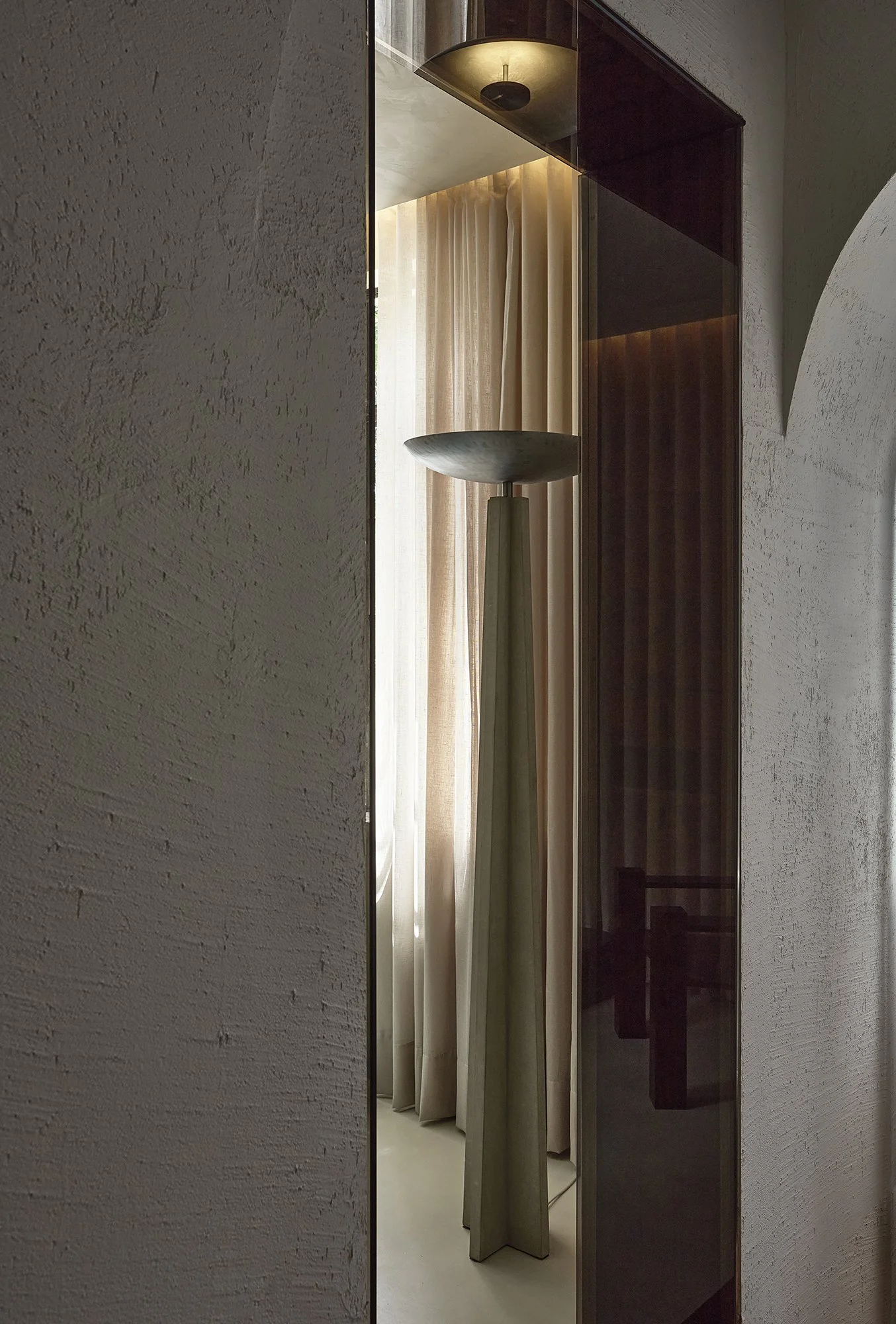
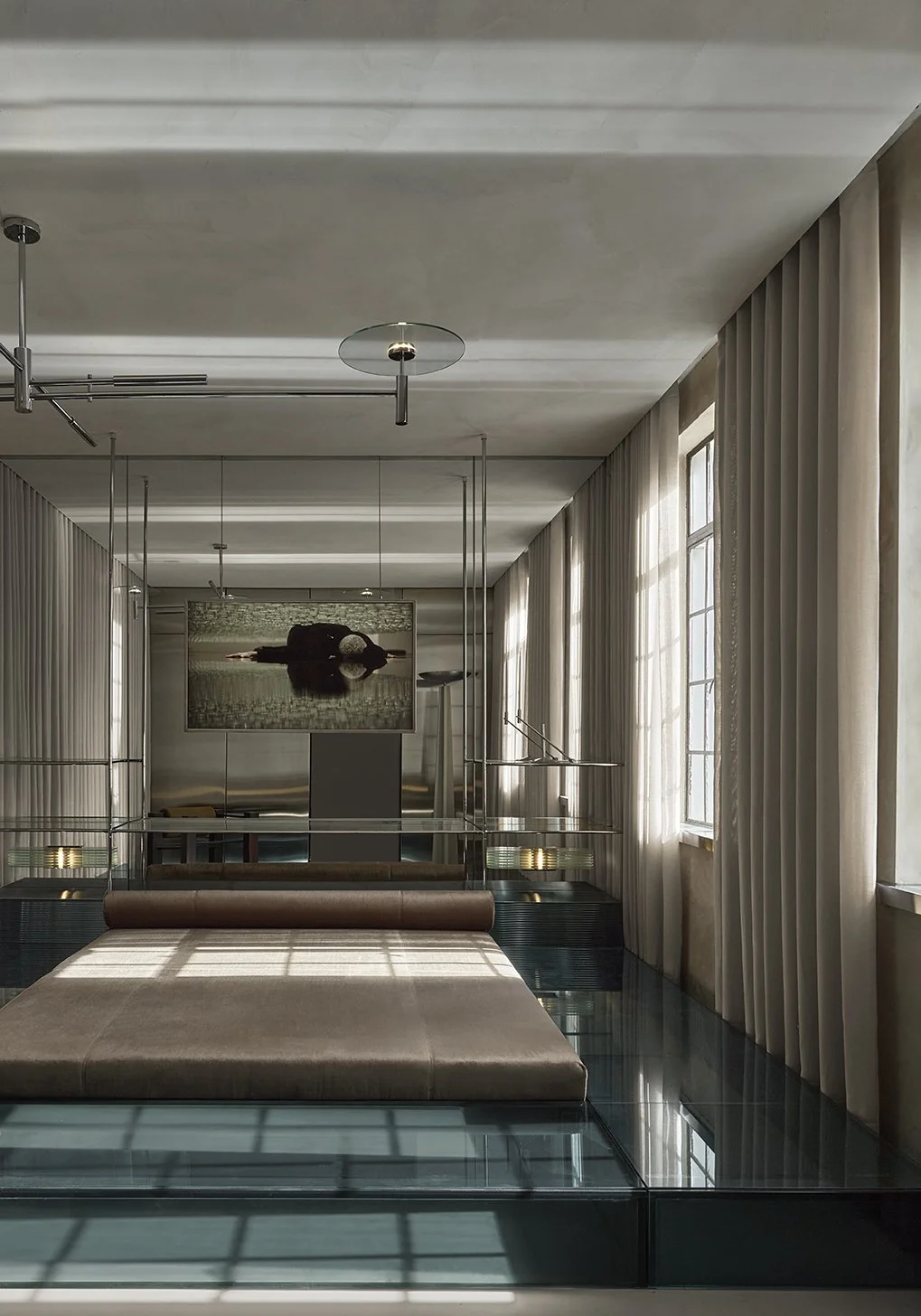
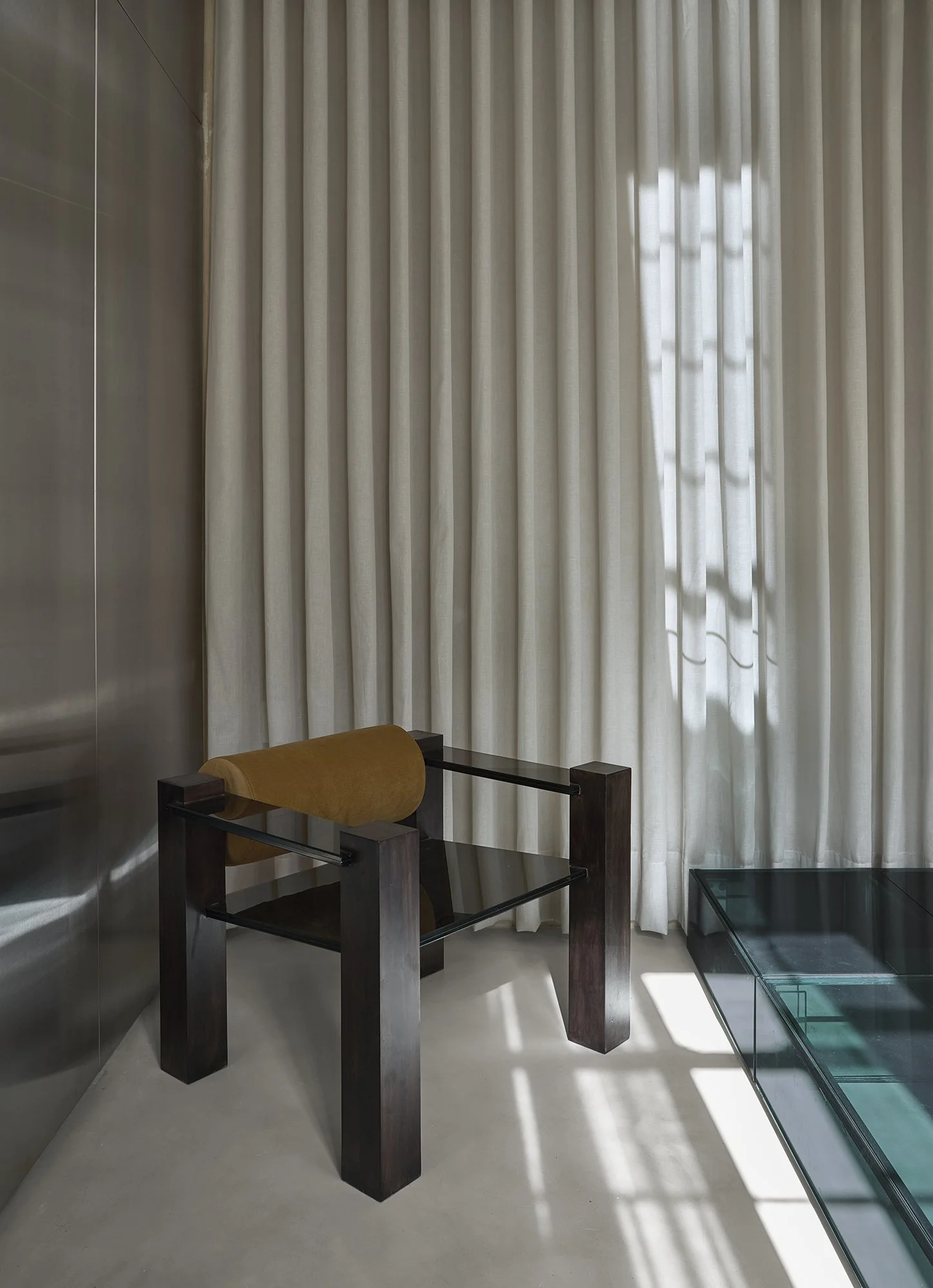
Ask him why he does it, and the answer is disarmingly clear: opening night. The light, the music, the people inhabiting the space. It is in that moment—when everything activates—that the work finds its meaning.
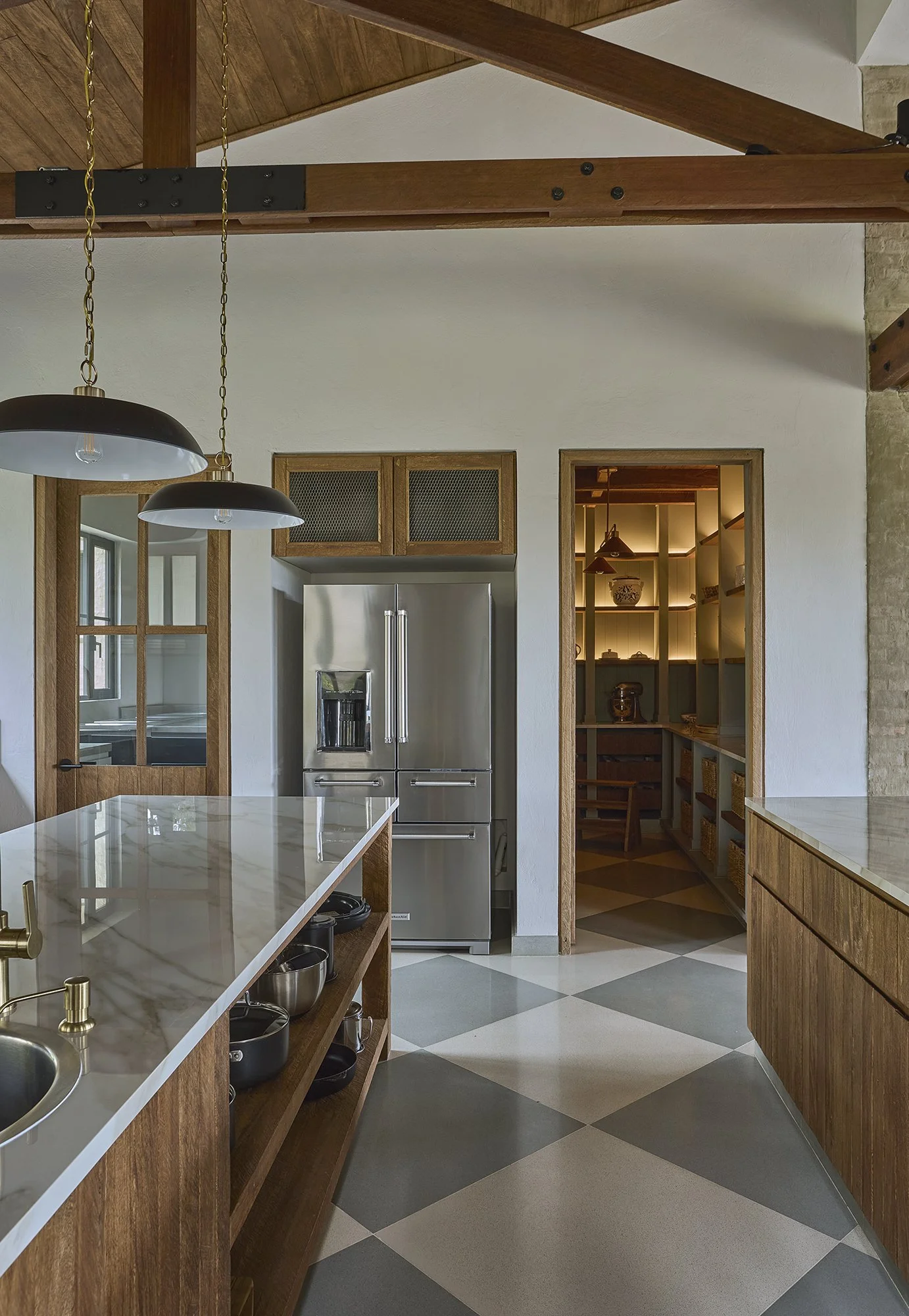
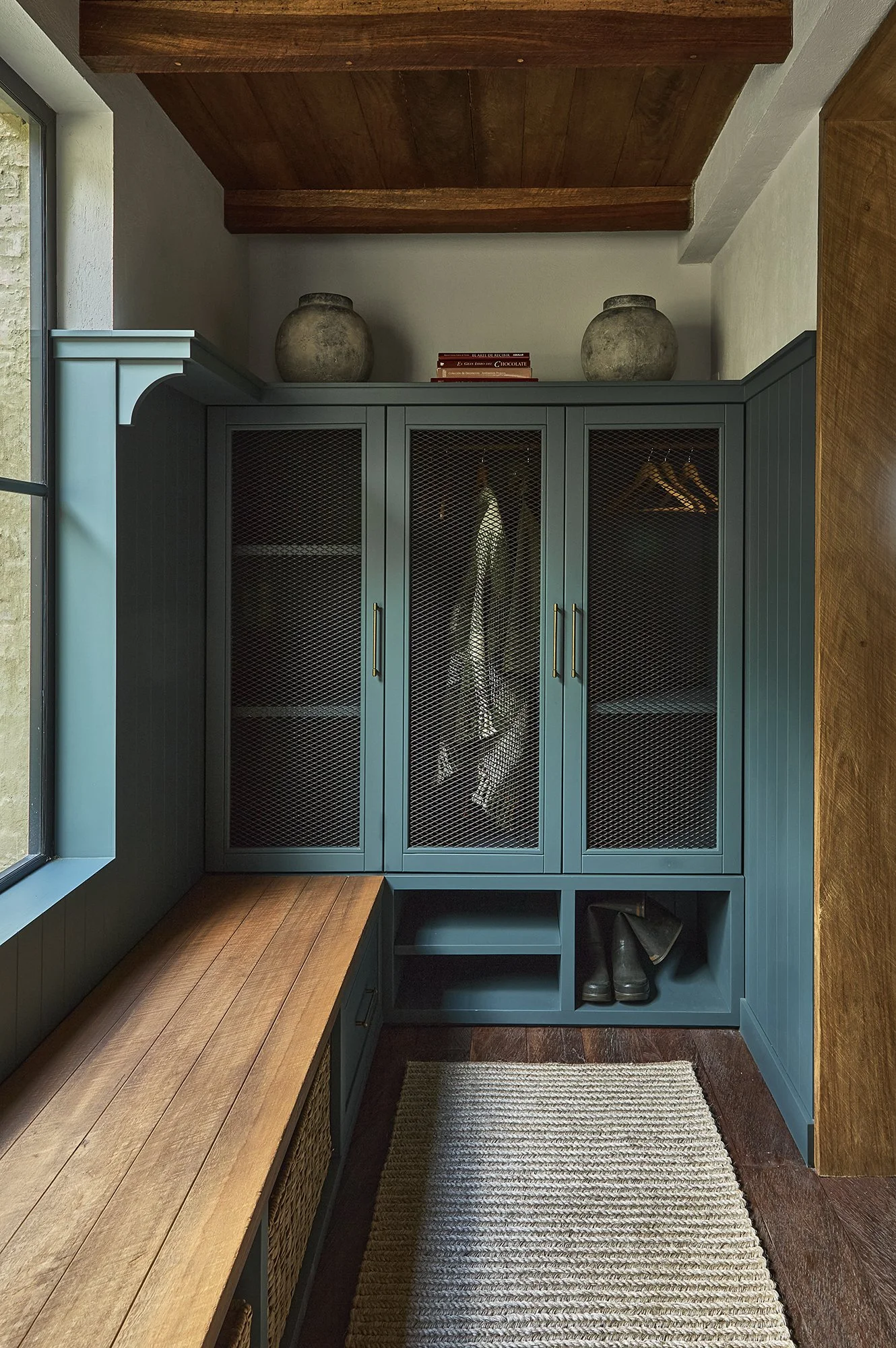
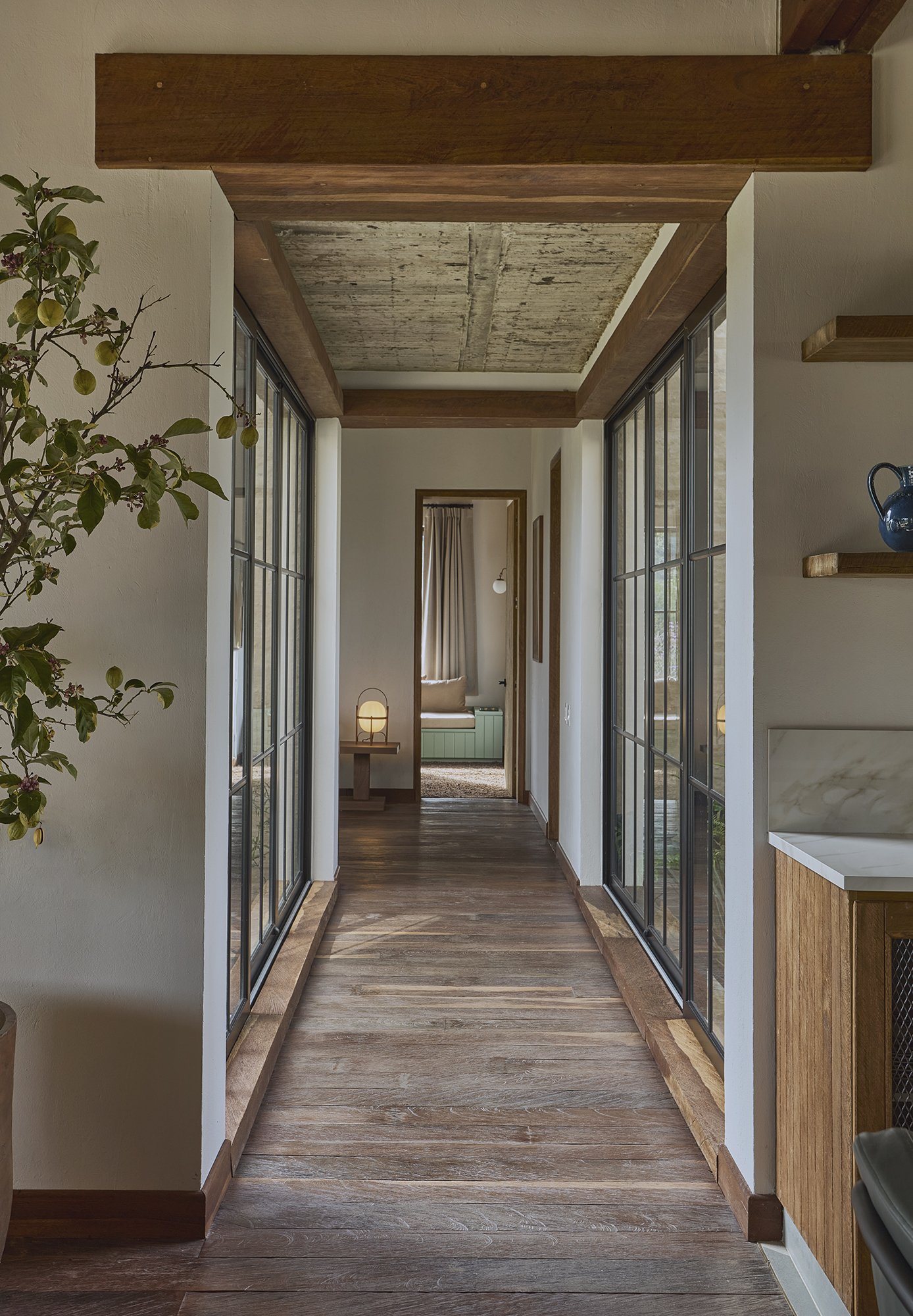
In a landscape where architecture oscillates between gesture and neutrality, Studio Peraza occupies a more exacting ground: one where space, light, and material coalesce into a continuous experience.
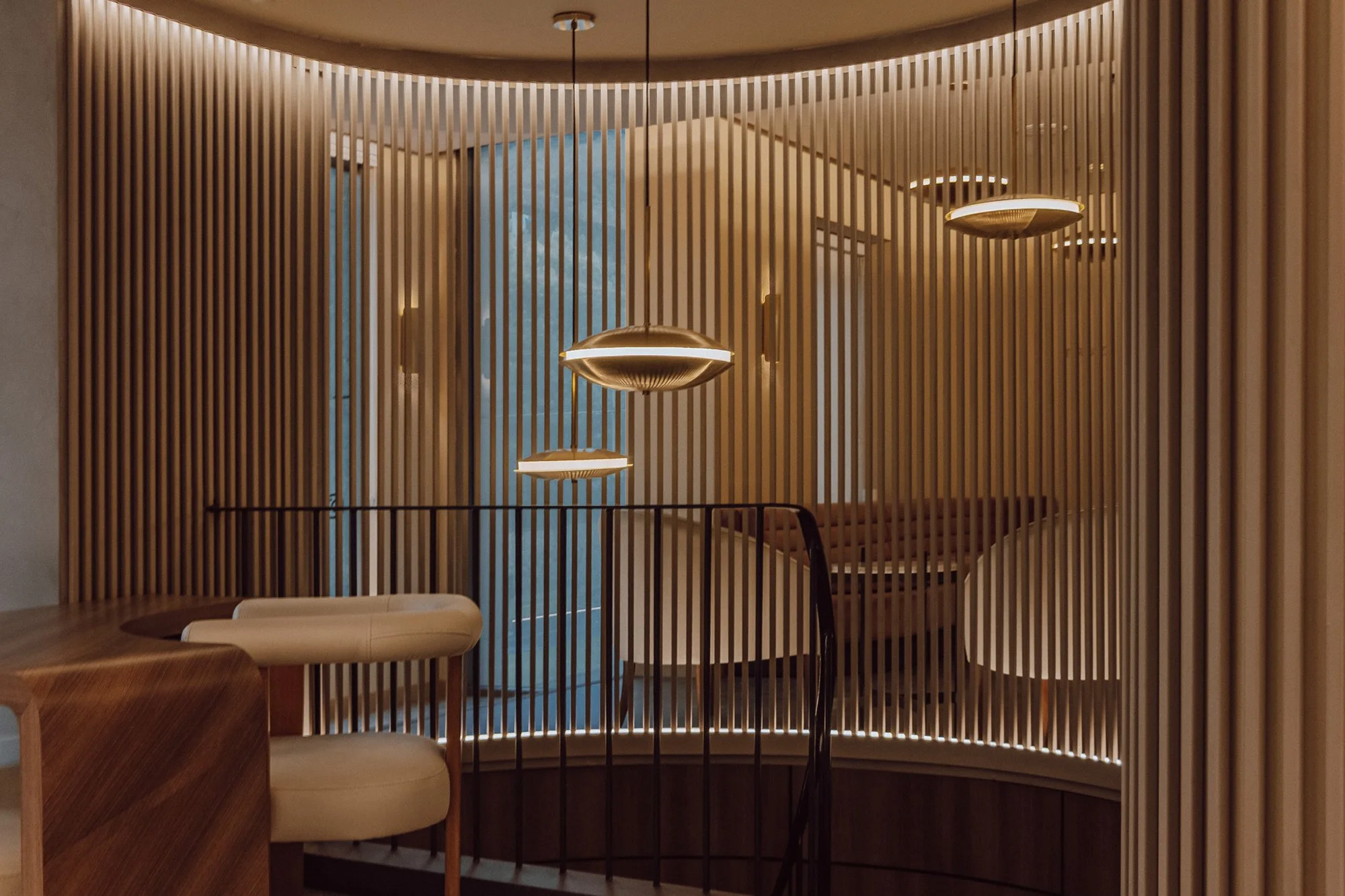
The Room. Photo Tragaluz
The power of curation: what Design Hotels gets right
At a time when hotels increasingly speak the same visual language — pale woods, warm lighting, hushed spas and a rehearsed promise of wellness — there is a platform that, for over three decades, has chosen a different direction.
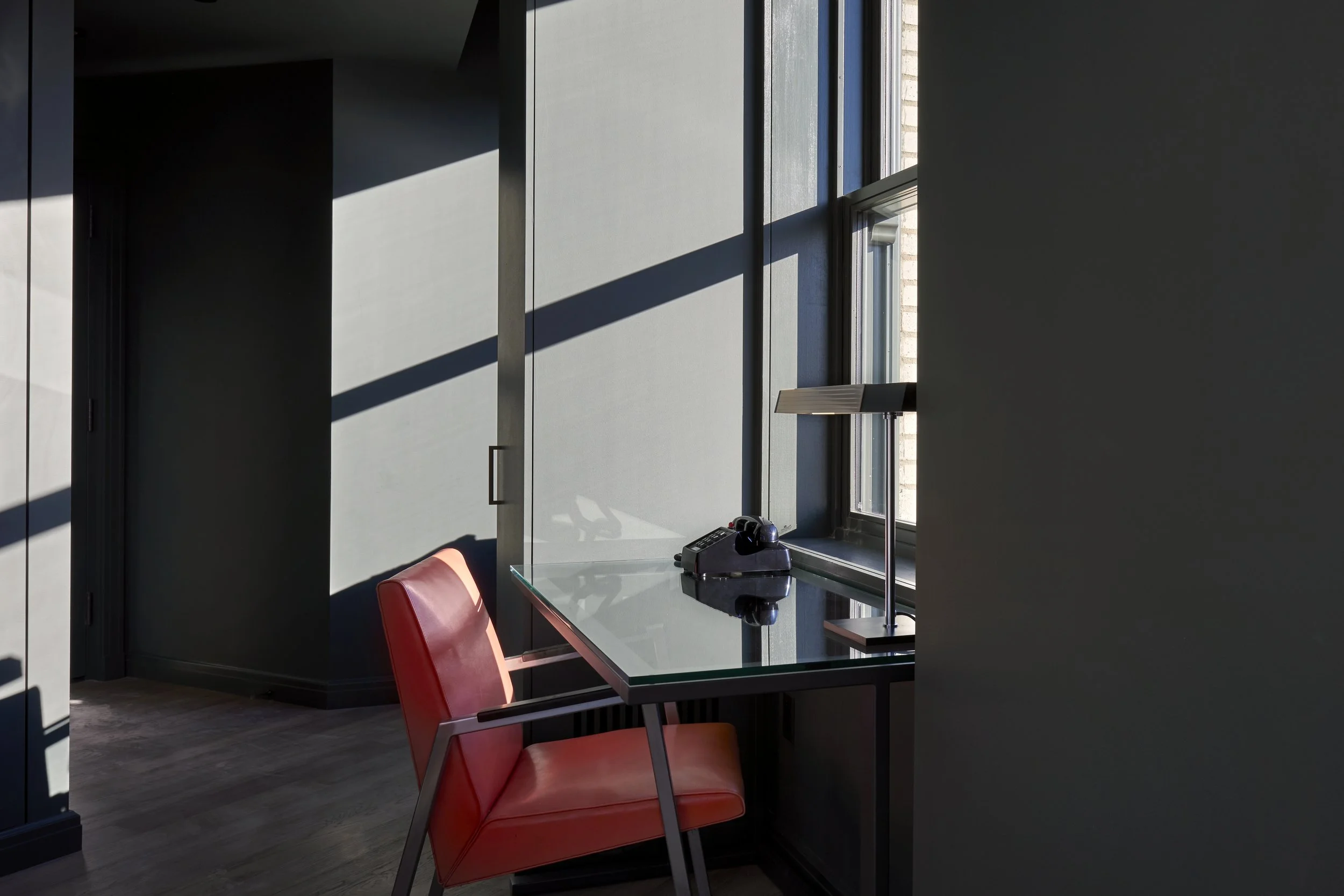
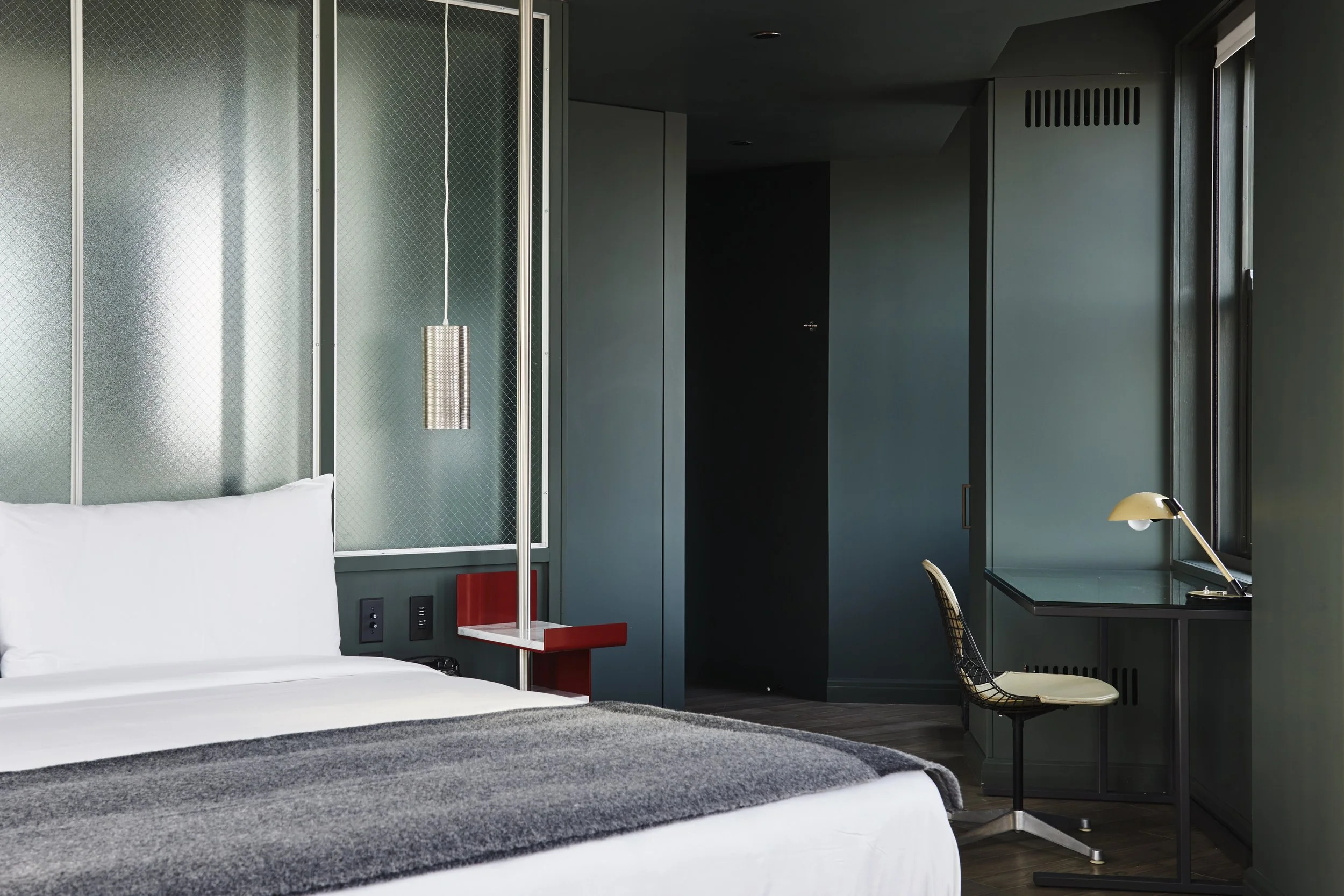
The Robey, Chicago. photo: Design Hotels
At a time when hotels increasingly speak the same visual language — pale woods, warm lighting, hushed spas and a rehearsed promise of wellness — there is a platform that, for over three decades, has chosen a different direction. Design Hotels is not a hotel chain. It never was. Rather, it operates as a way of editing the world through places. Founded in 1993 by Claus Sendlinger and based in Berlin, its origins are telling. Berlin — with its layered history, independent spirit and resistance to uniformity — does not simply host the brand; it defines it. From the outset, the proposition was clear: to build a global network of independently owned hotels without erasing their identity.
Today, under the direction of Stijn Oyen, that vision has only sharpened: less volume, more intent; less trend, more narrative. In a landscape dominated by large-scale hospitality groups built on replication, Design Hotels introduced something quietly radical: each property as an authored space, not a variation of a central script. This was never about luxury in its traditional sense, but about something more elusive — and ultimately more valuable —: discernment.
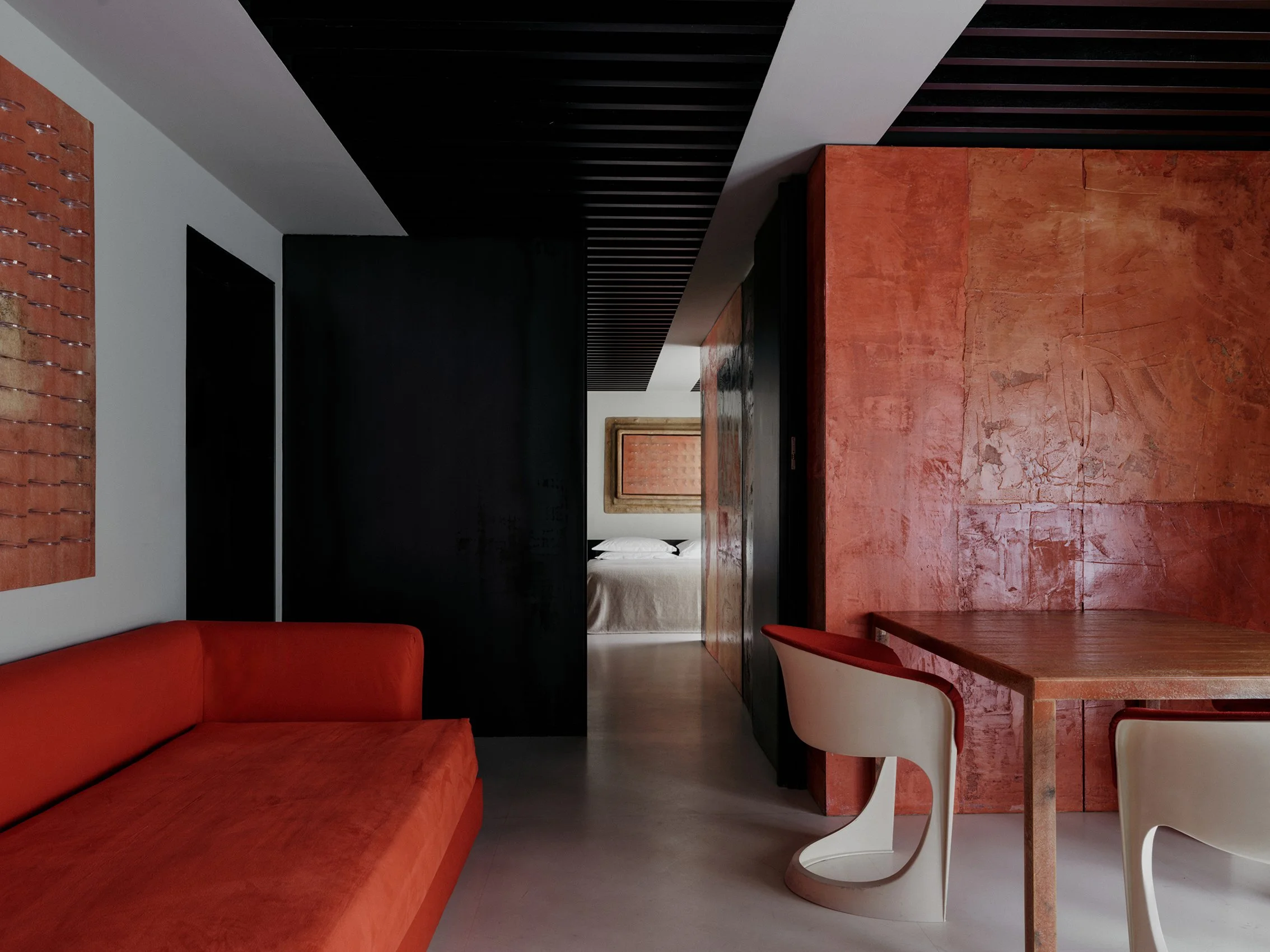
Straf Hotel, Milano. photo: Design Hotels
At its core, the model is curatorial. A tightly filtered selection, approached with the eye of an editor rather than the logic of an operator. Architecture with purpose, design with narrative — places that do not simply look considered, but carry meaning. The hotel shifts from container to medium. That editorial logic extends beyond the physical space. It takes form in initiatives such as Directions, a publication that reads less like a brand extension and more like a cultural object — exploring territory, design and contemporary thought with a clarity that resists promotion. It is not a catalogue; it is a point of view.
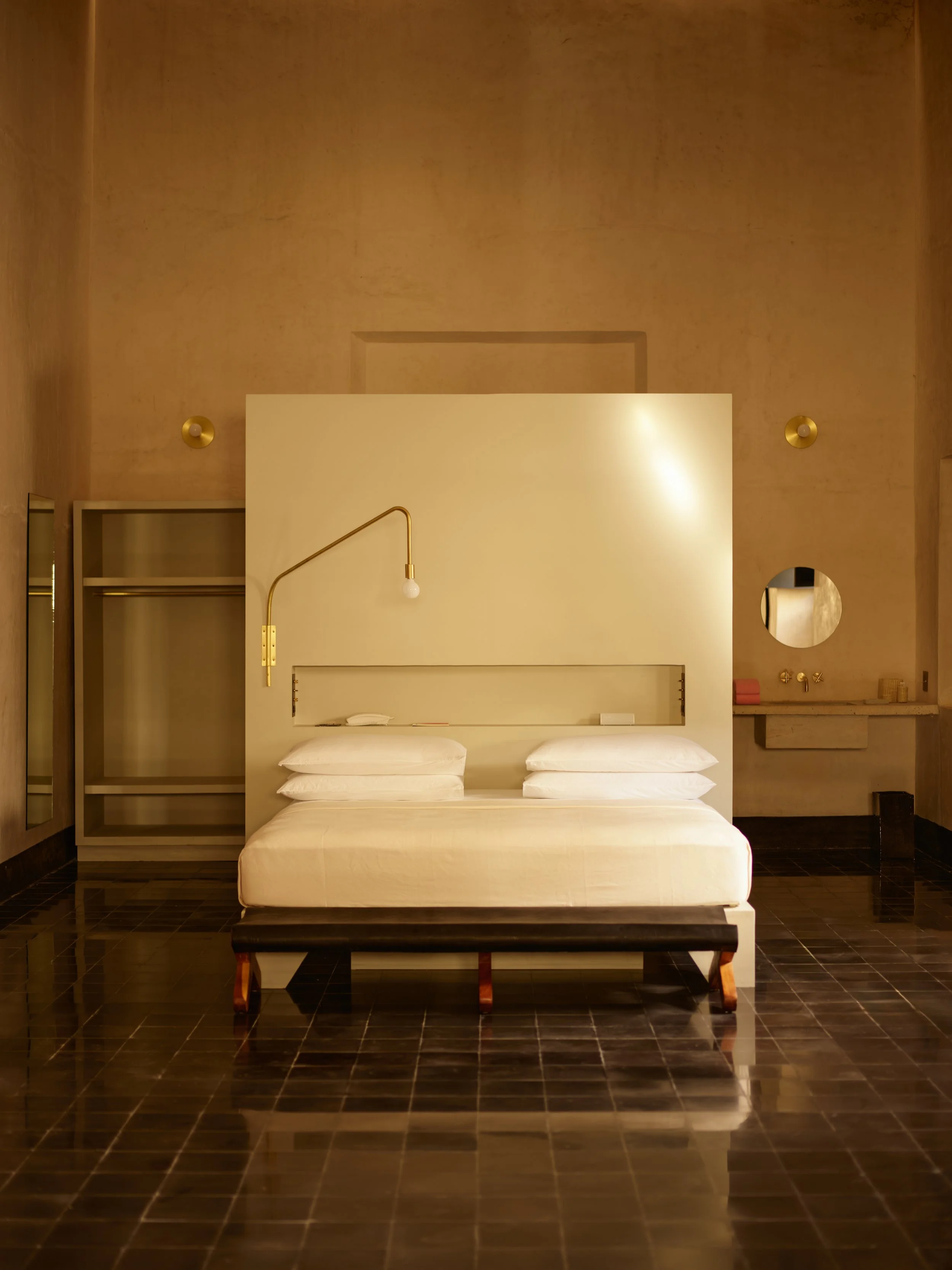
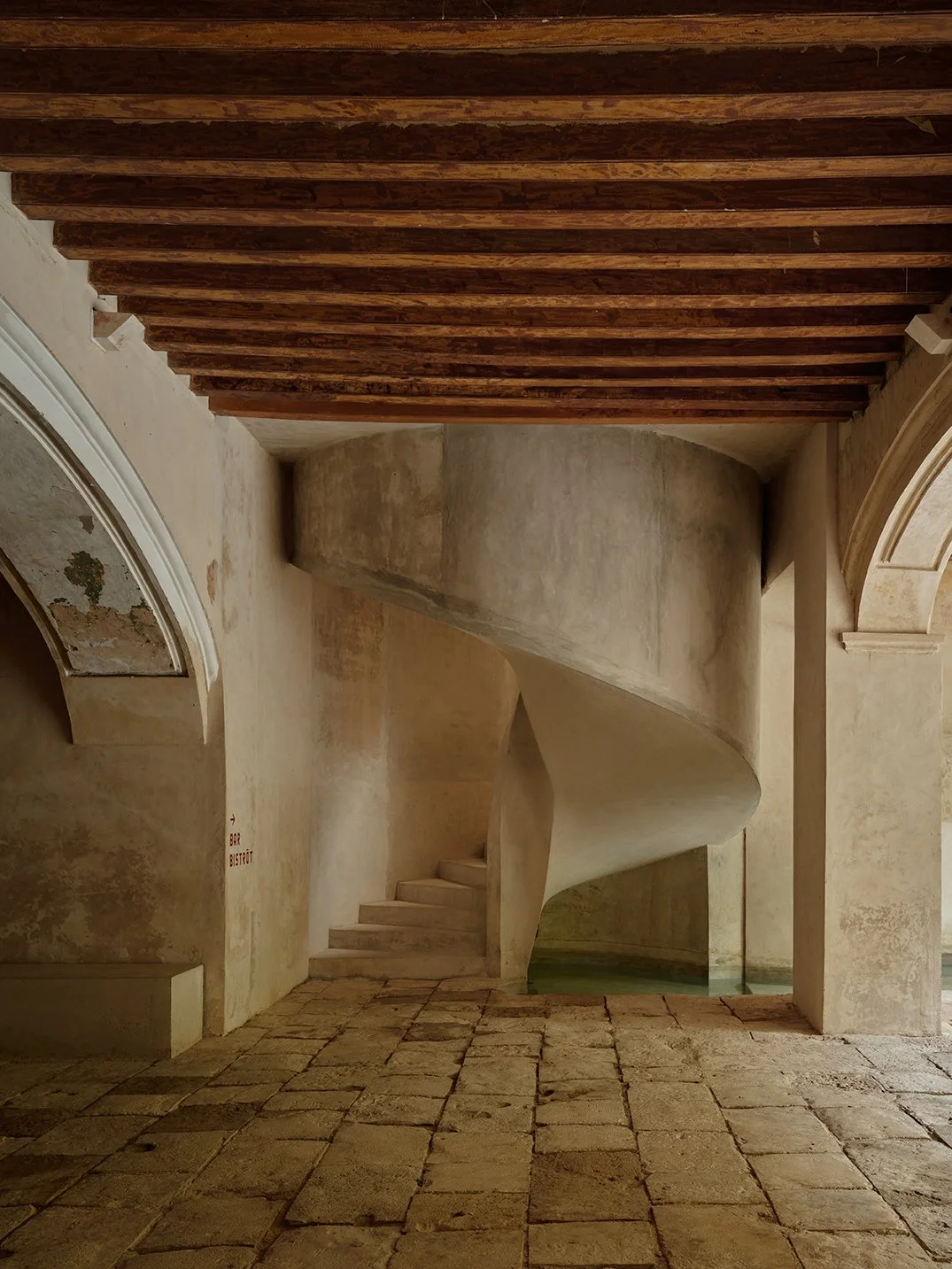
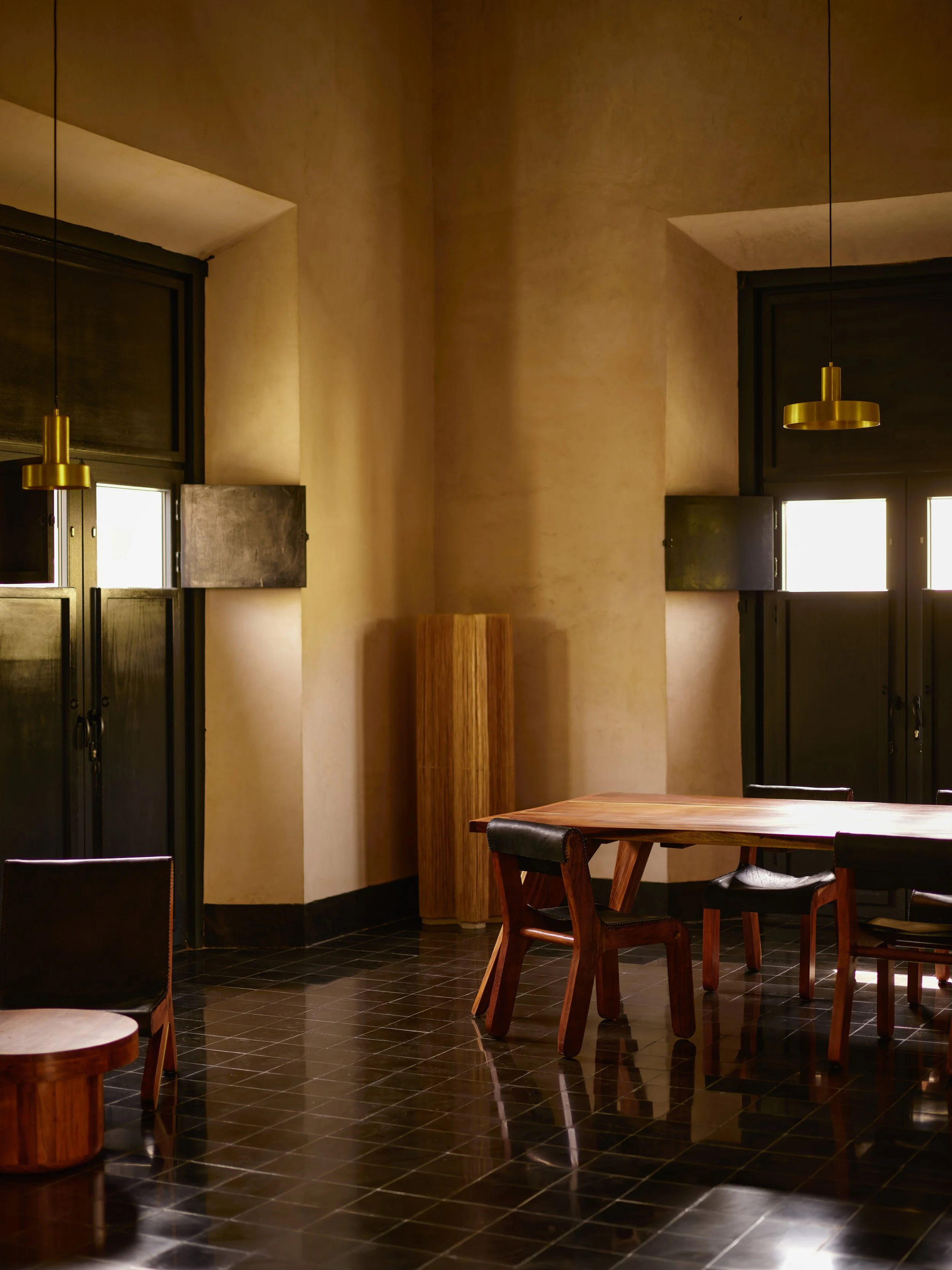
Hotel Sevilla, Merida. photo: Design Hotels
And this is where its relevance lies. Design Hotels understood early on that travel is no longer about movement, but about identity. The guest is not simply looking for where to stay, but for how to experience a place — and, in turn, how to situate themselves within it. For that reason, the value it offers is not found in perks, but in perspective. In the ability to navigate an increasingly saturated landscape without defaulting to the interchangeable. In accessing places that feel discovered rather than delivered. There are no guarantees of traditional luxury, nor of seamless uniformity.
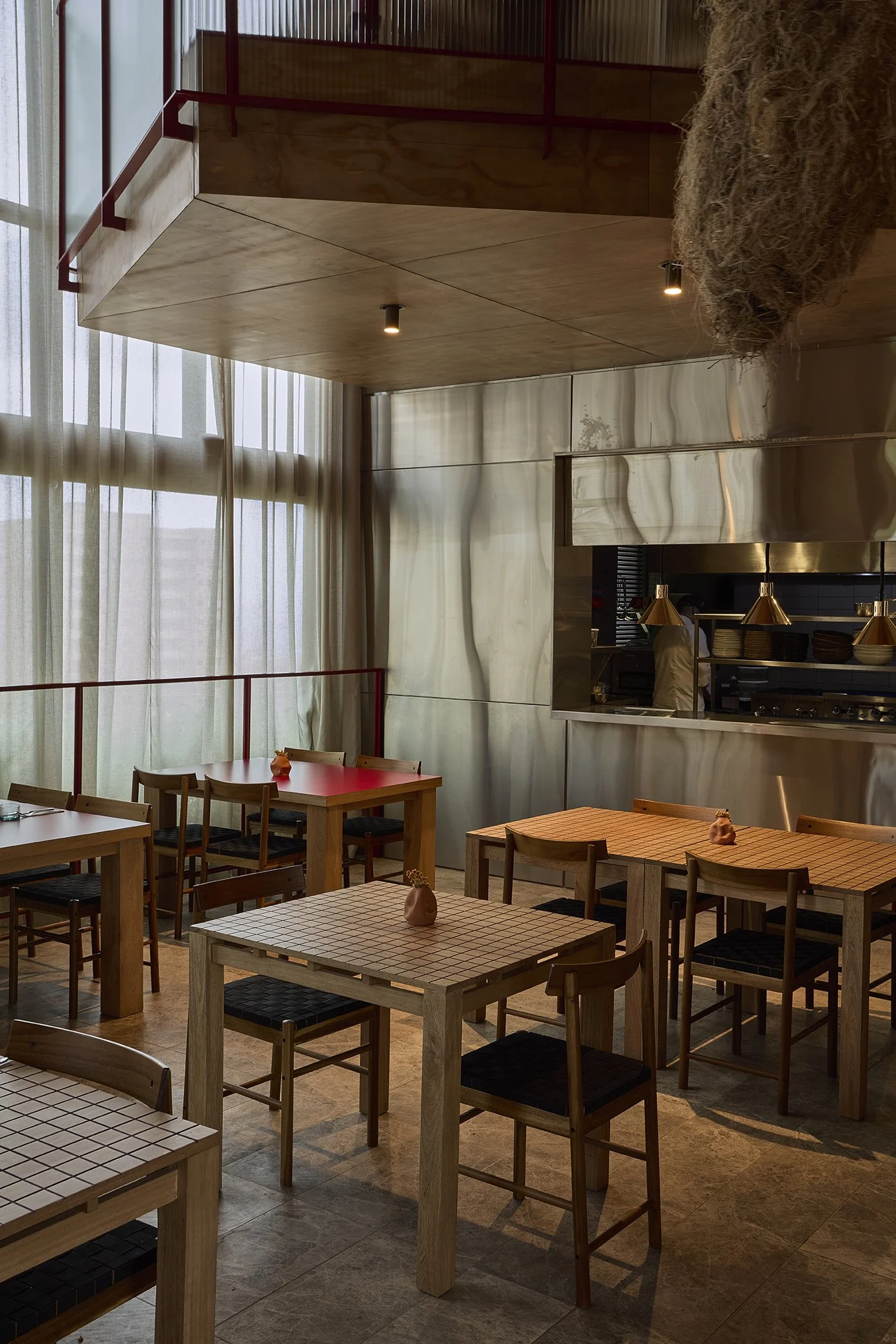
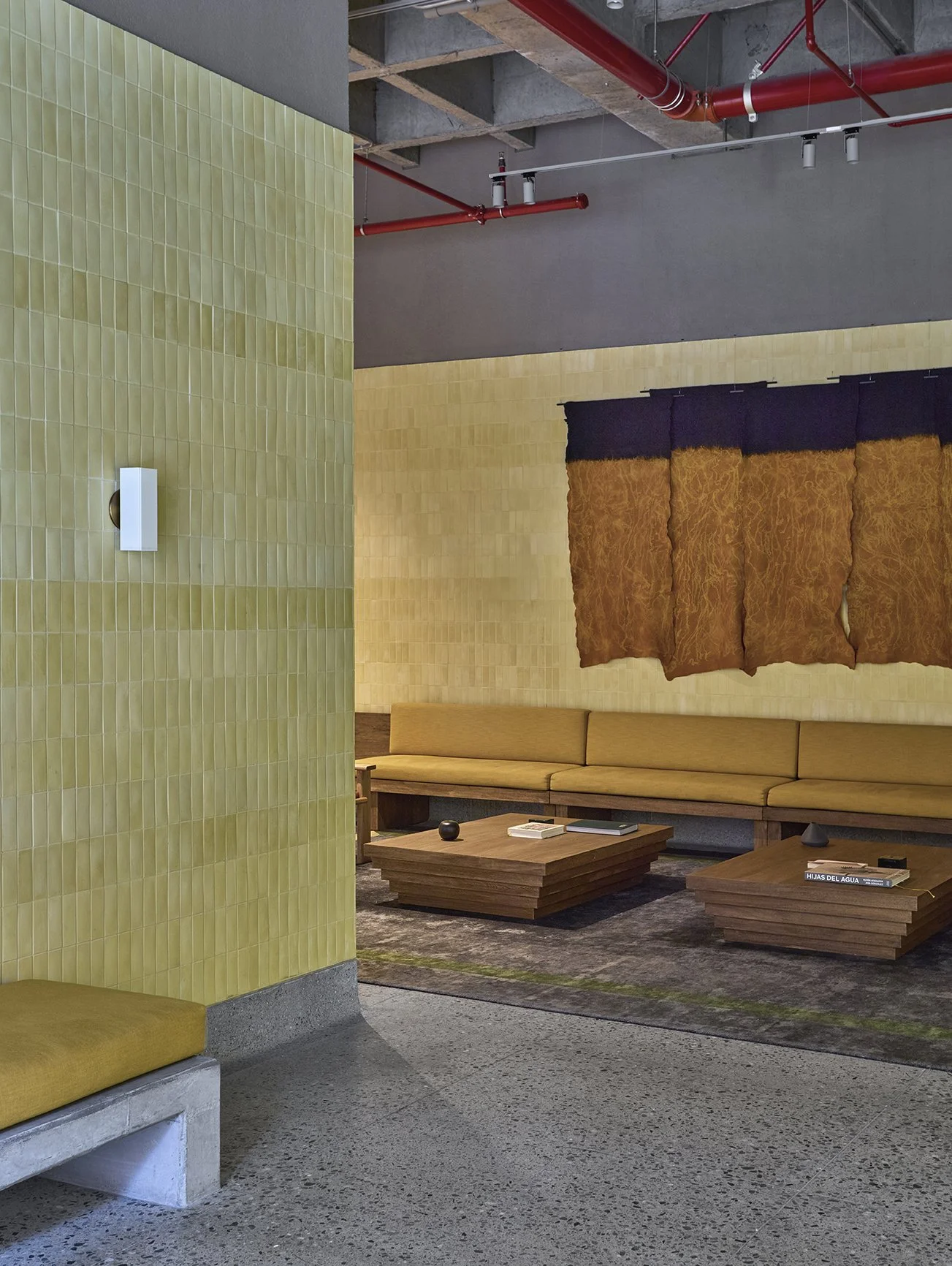
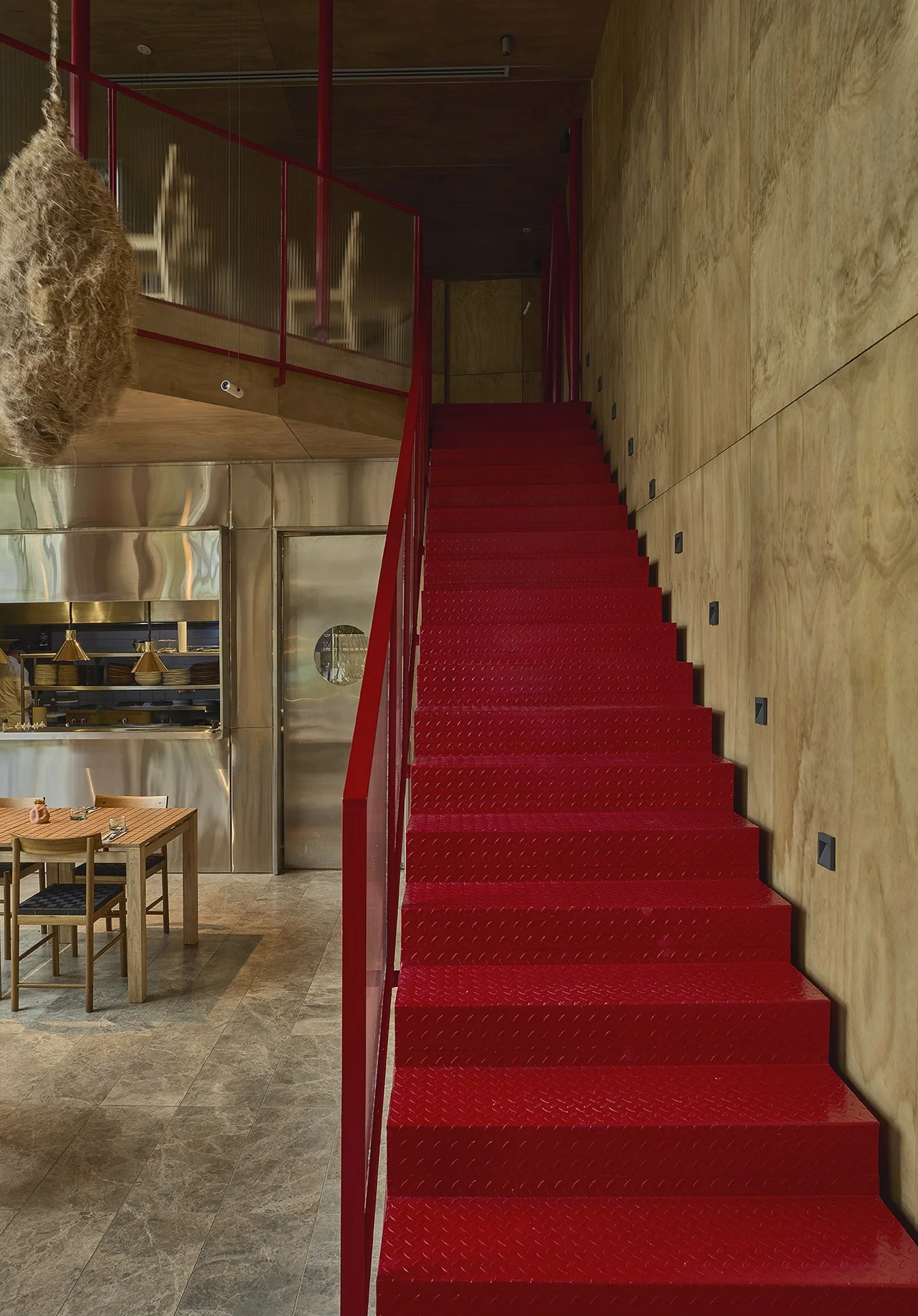
Wake Bio hotel, Medellín. photo: ©Monica Barreneche
What it offers instead is something more precise: coherence. Hotels that operate as cultural nodes, where design is not decoration but discourse, and where experience is shaped by a genuine connection to place rather than a staged approximation of it. To engage with Design Hotels, then, is less about membership and more about alignment. A global network of travellers drawn not to spectacle, but to intention. Which is perhaps why it continues to matter.
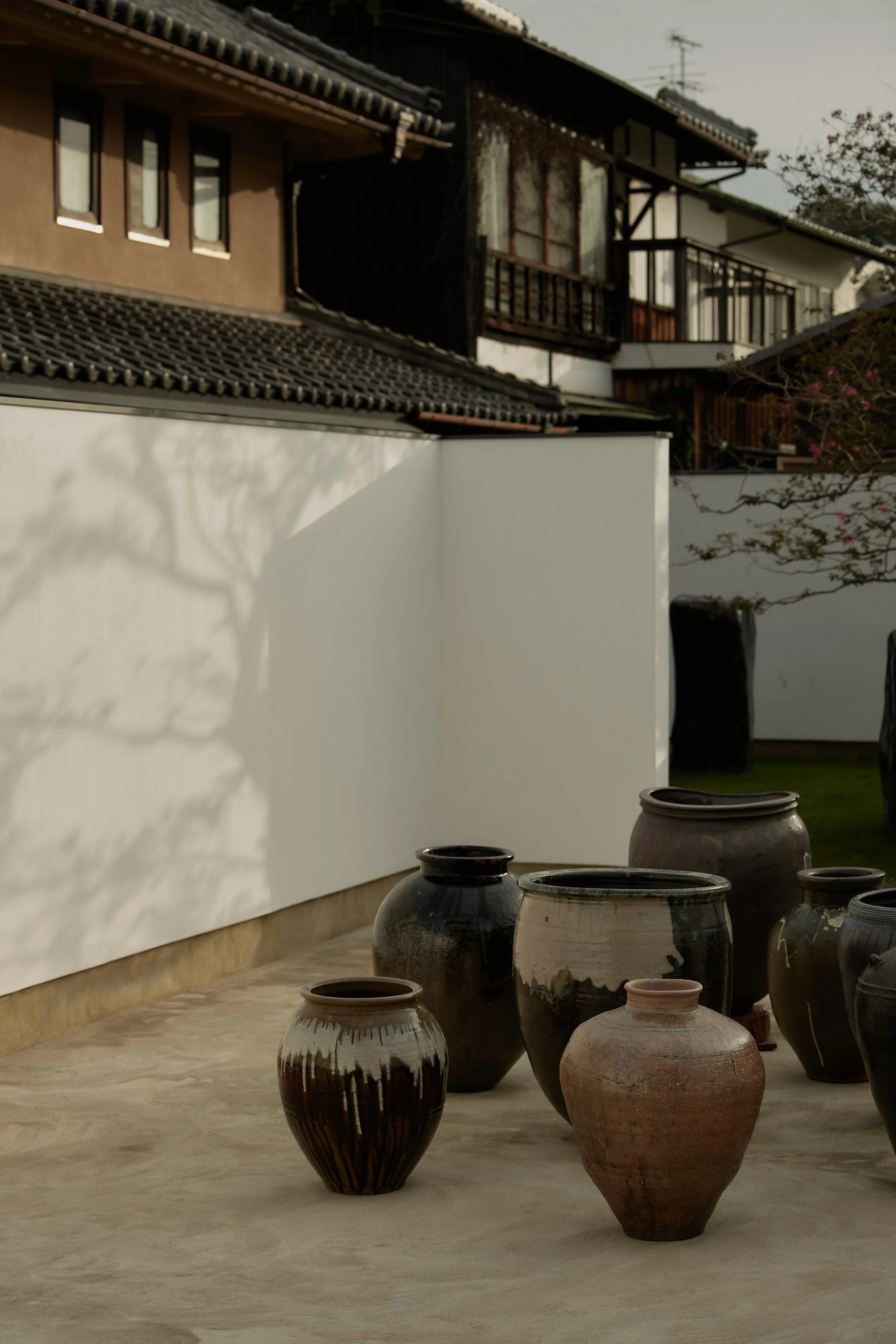
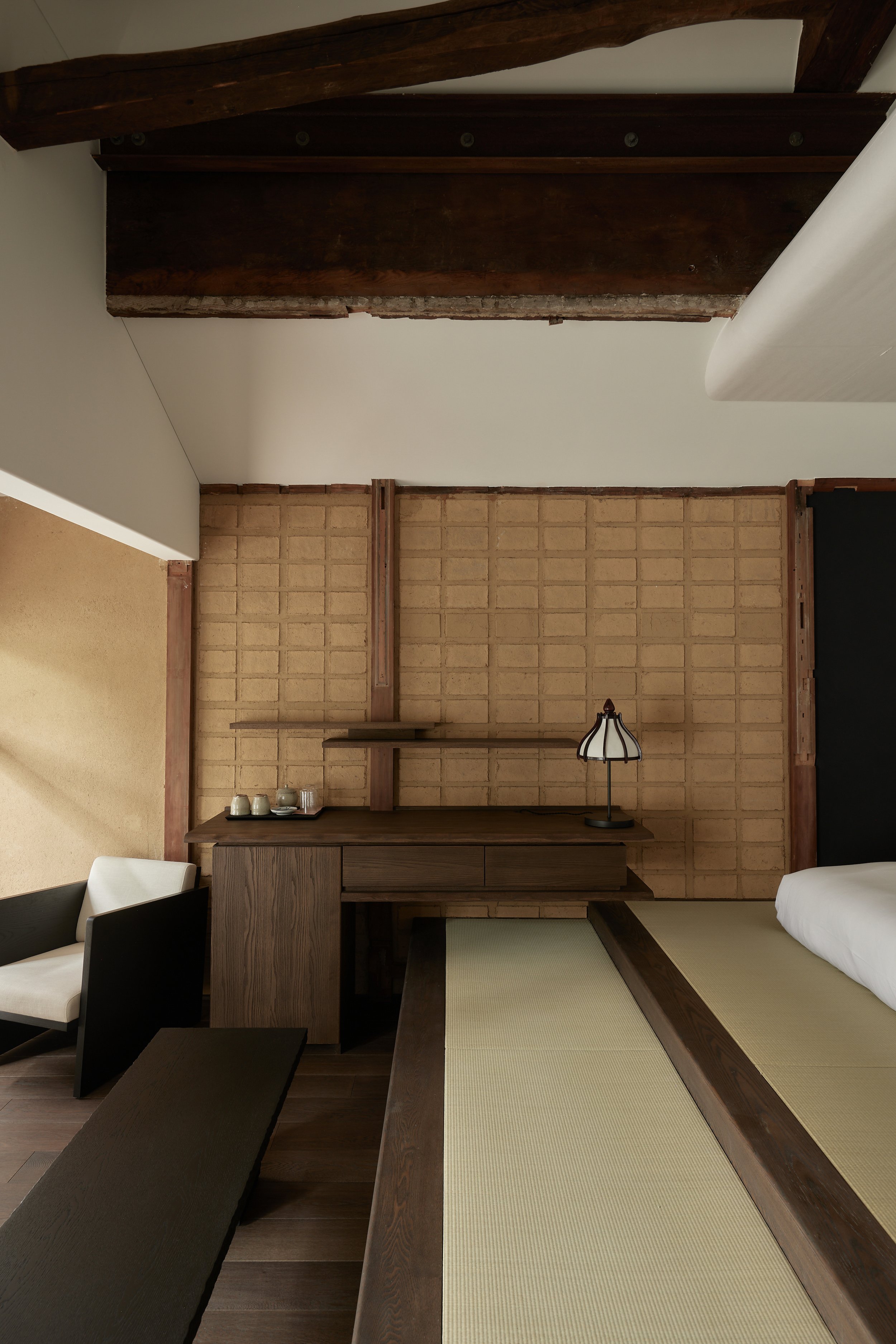
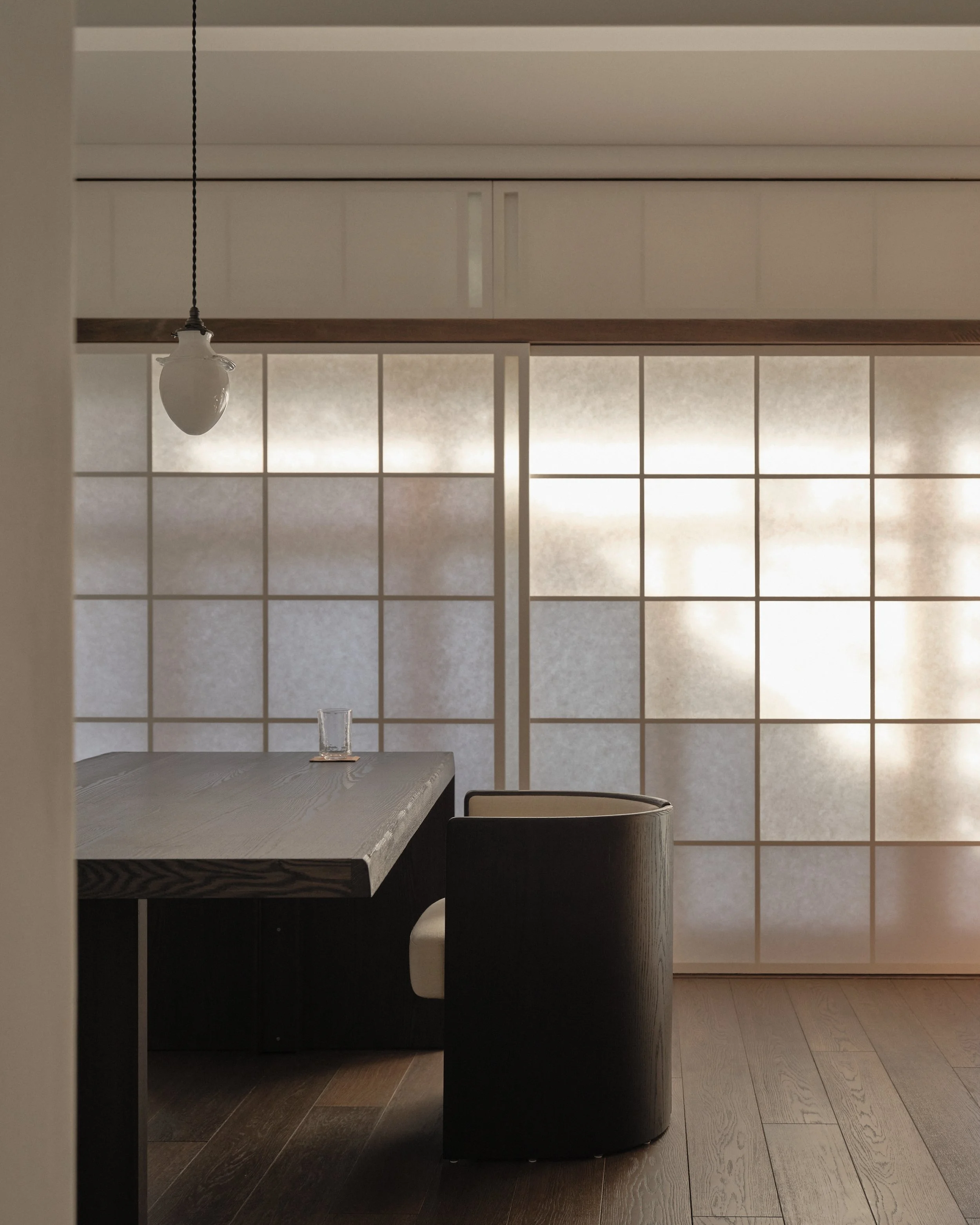
Yoruya Hotel, Japan. photo: Design Hotels
In a world where everything risks looking the same, Design Hotels insists — quietly, but consistently — that places can still carry character.
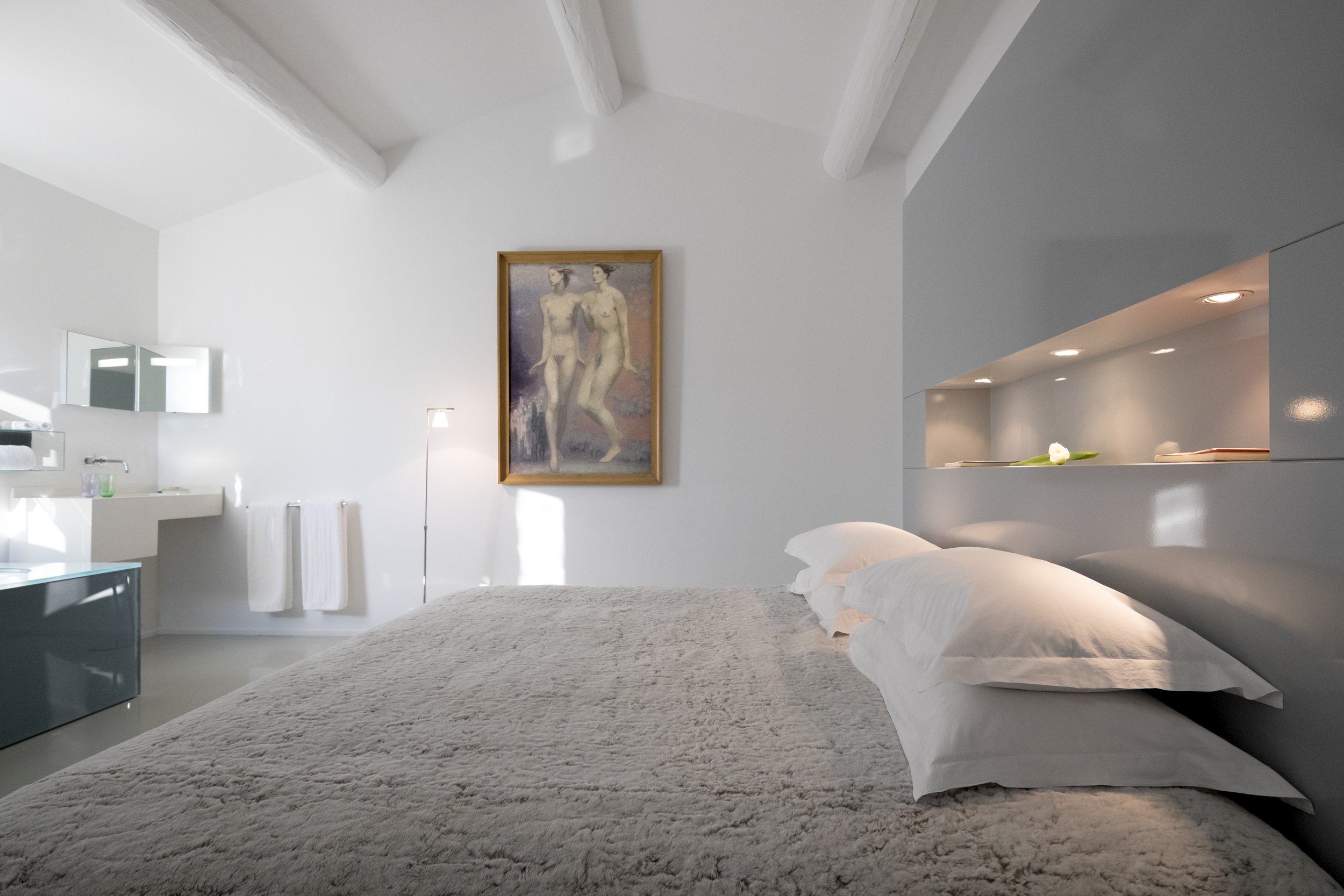
Domaine des Andéols, France. photo: Design Hotels
Modernism Under Tropical Light
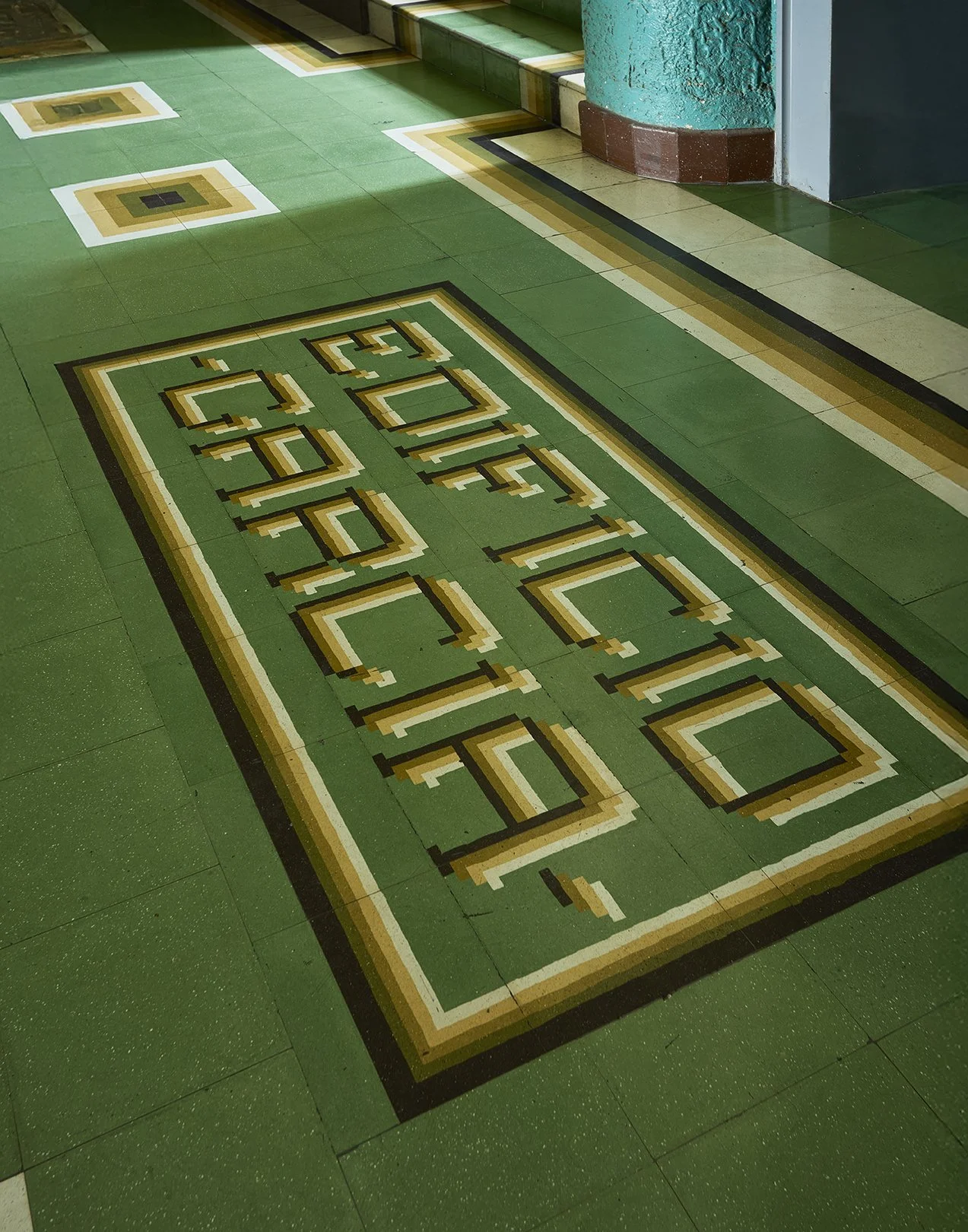
Edificio Garcia
In downtown Barranquilla, where commerce, migration and tropical light converge, one building quietly tells the story of a city becoming modern.
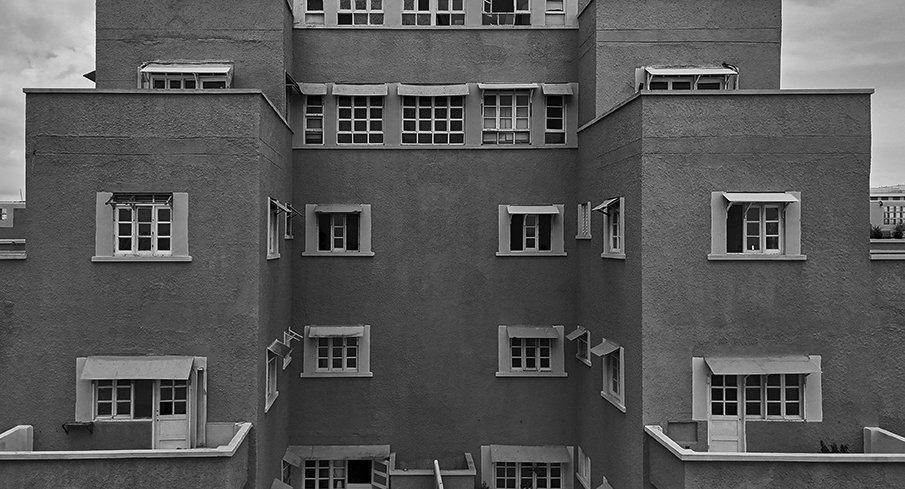
In downtown Barranquilla — where trade routes, tropical light and migrant cultures have long converged — the García Building stands as a quiet marker of the city’s mid-century awakening. It does not dominate the skyline so much as it participates in it: a measured, rhythmic presence embedded in the commercial pulse of the historic centre.
Photos: Monica Barreneche ©.
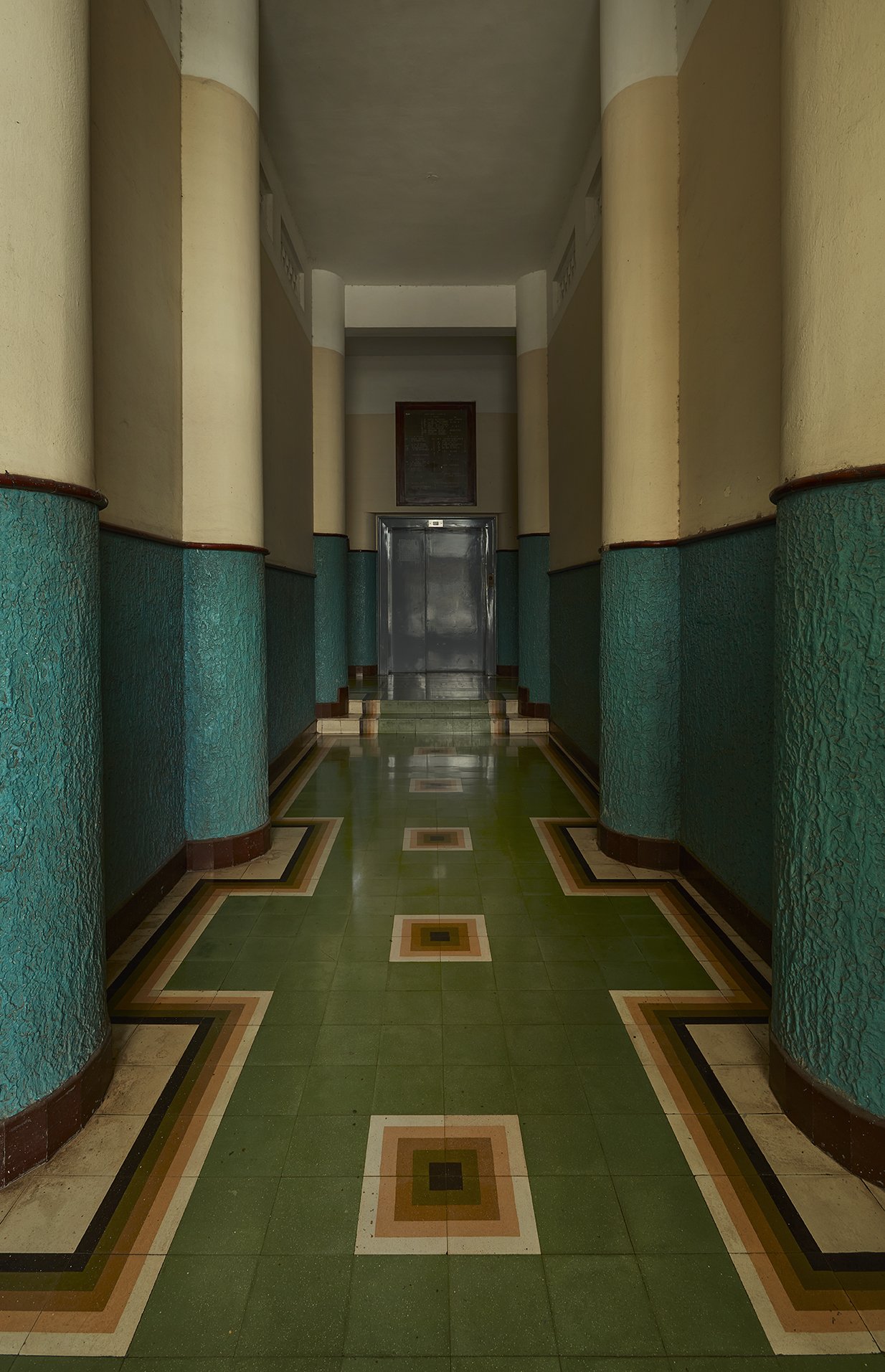
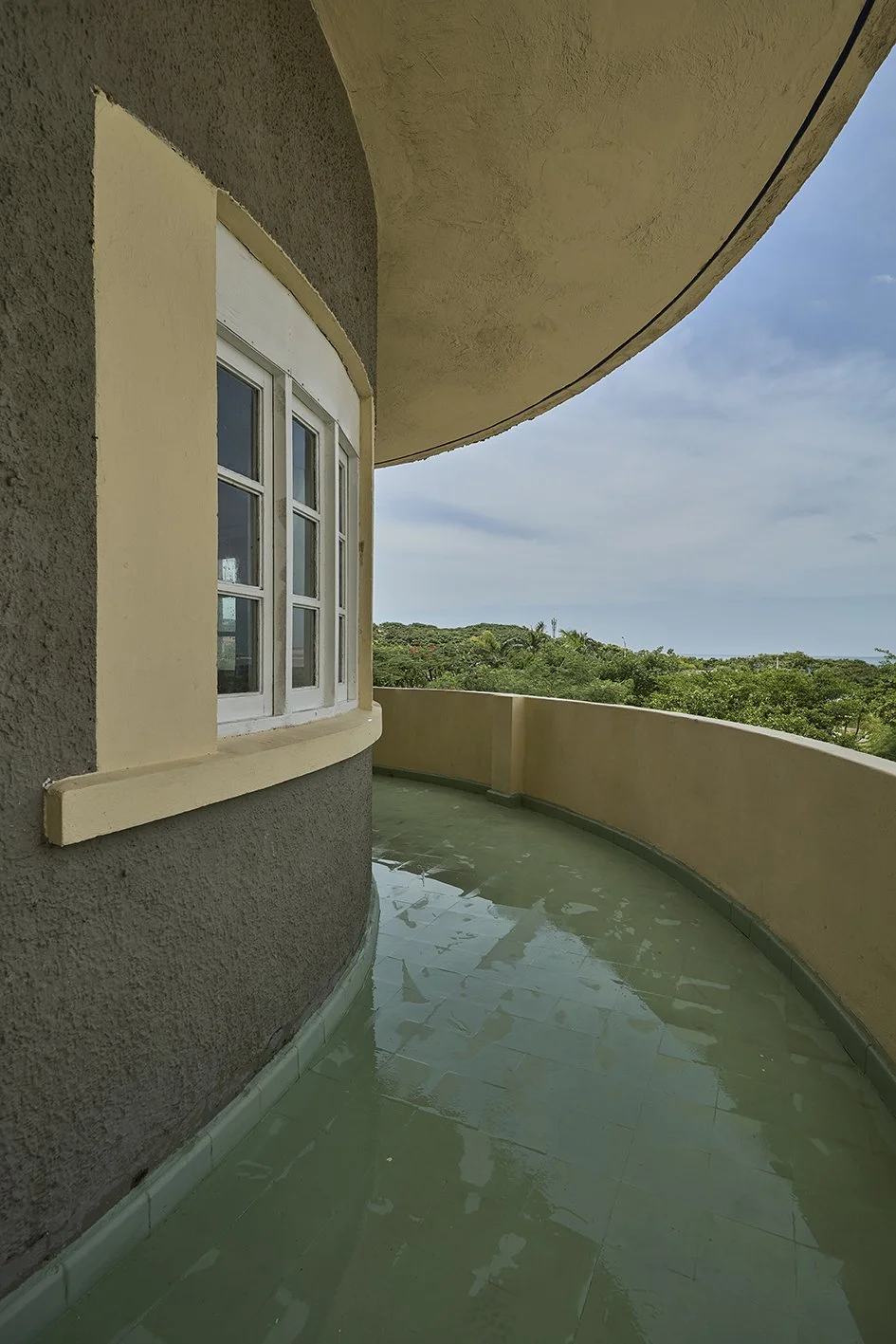
Completed between the late 1950s and early 1960s, during the height of Barranquilla’s port-driven prosperity, the building was commissioned by the García family as a mixed-use commercial and office address. At the time, the city was projecting itself outward — toward the Caribbean, toward Miami, toward a broader idea of modern life shaped by business, music, migration and exchange. Architecture became one of the vehicles through which that aspiration took form.
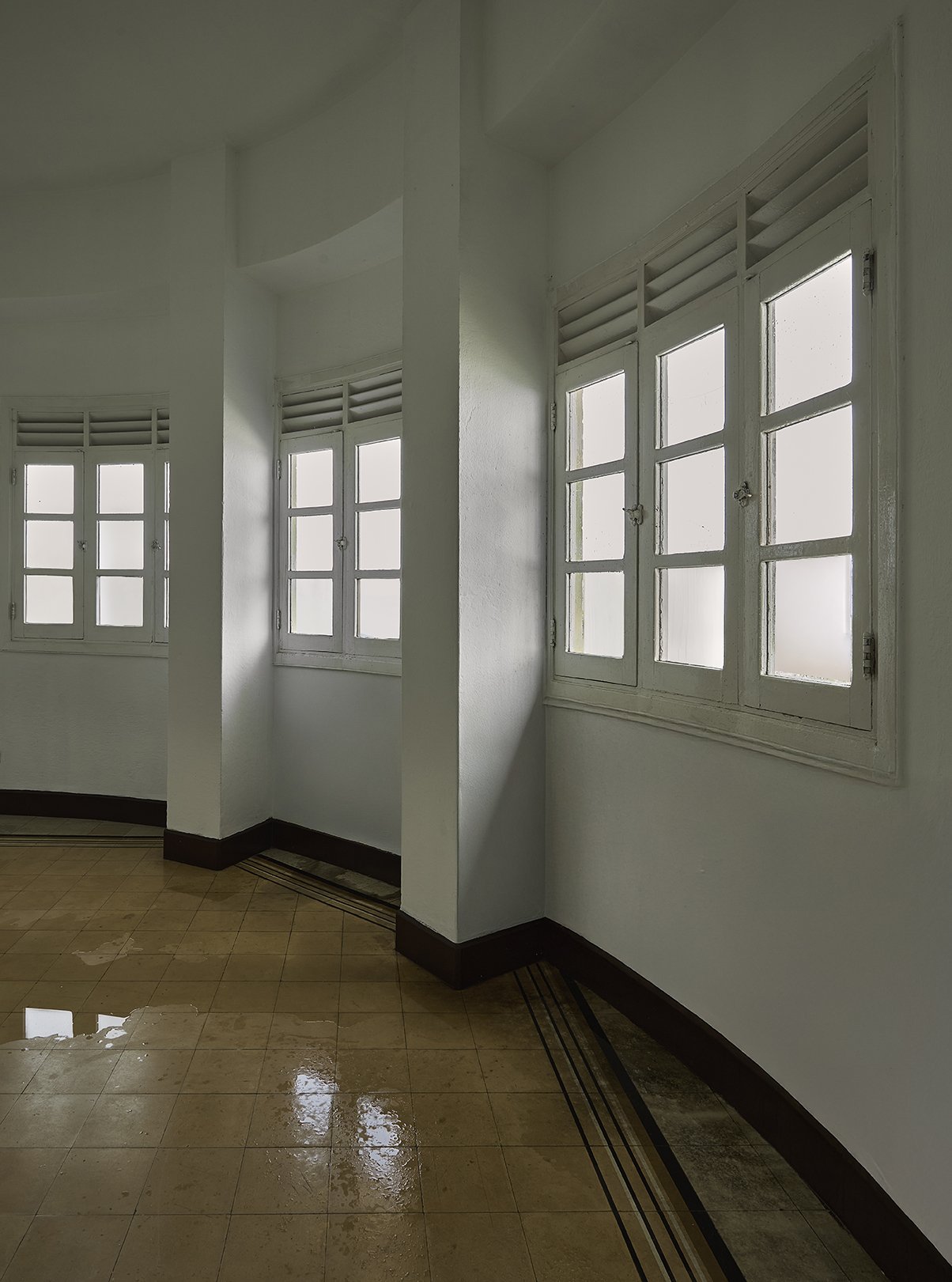
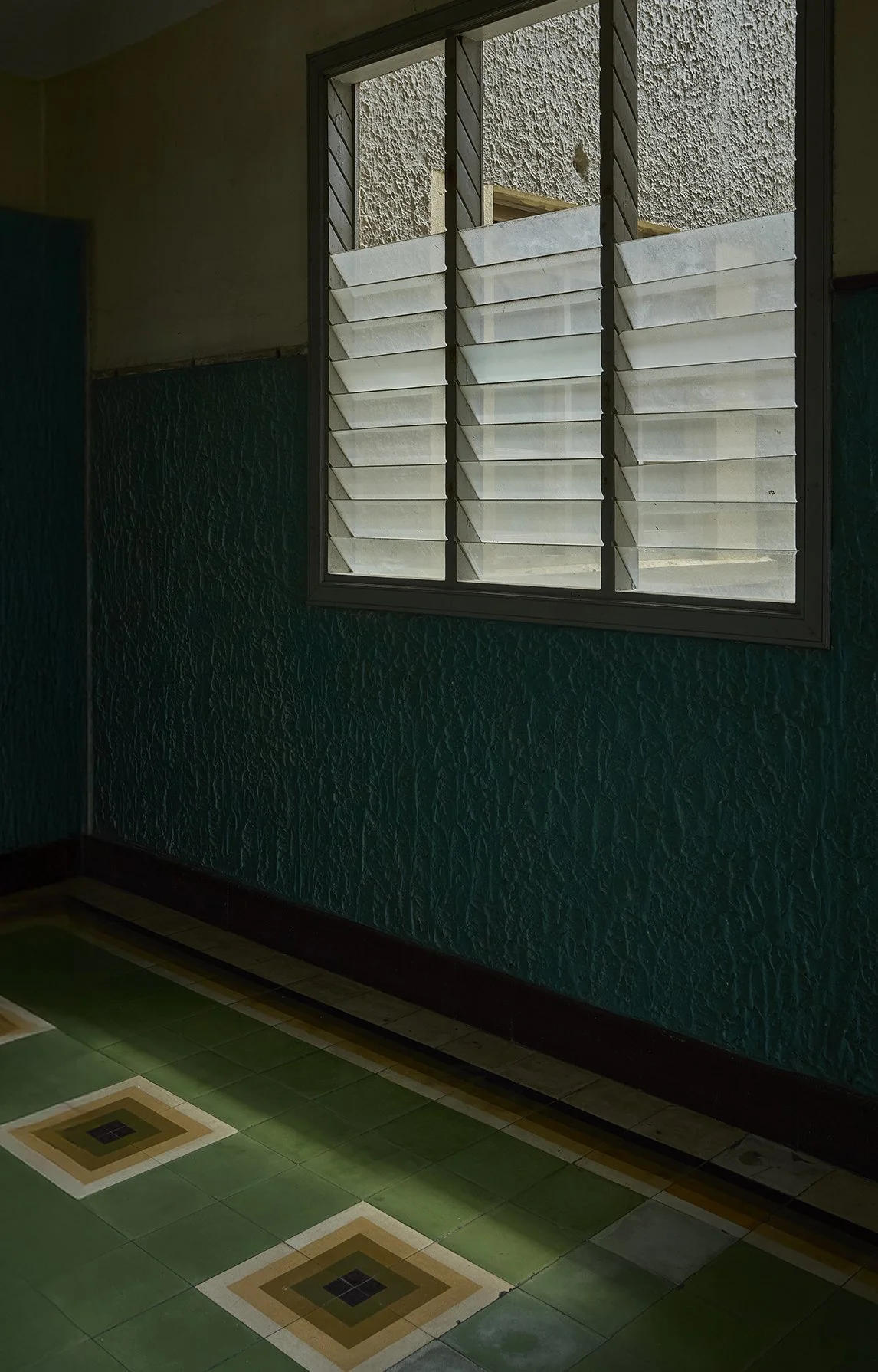
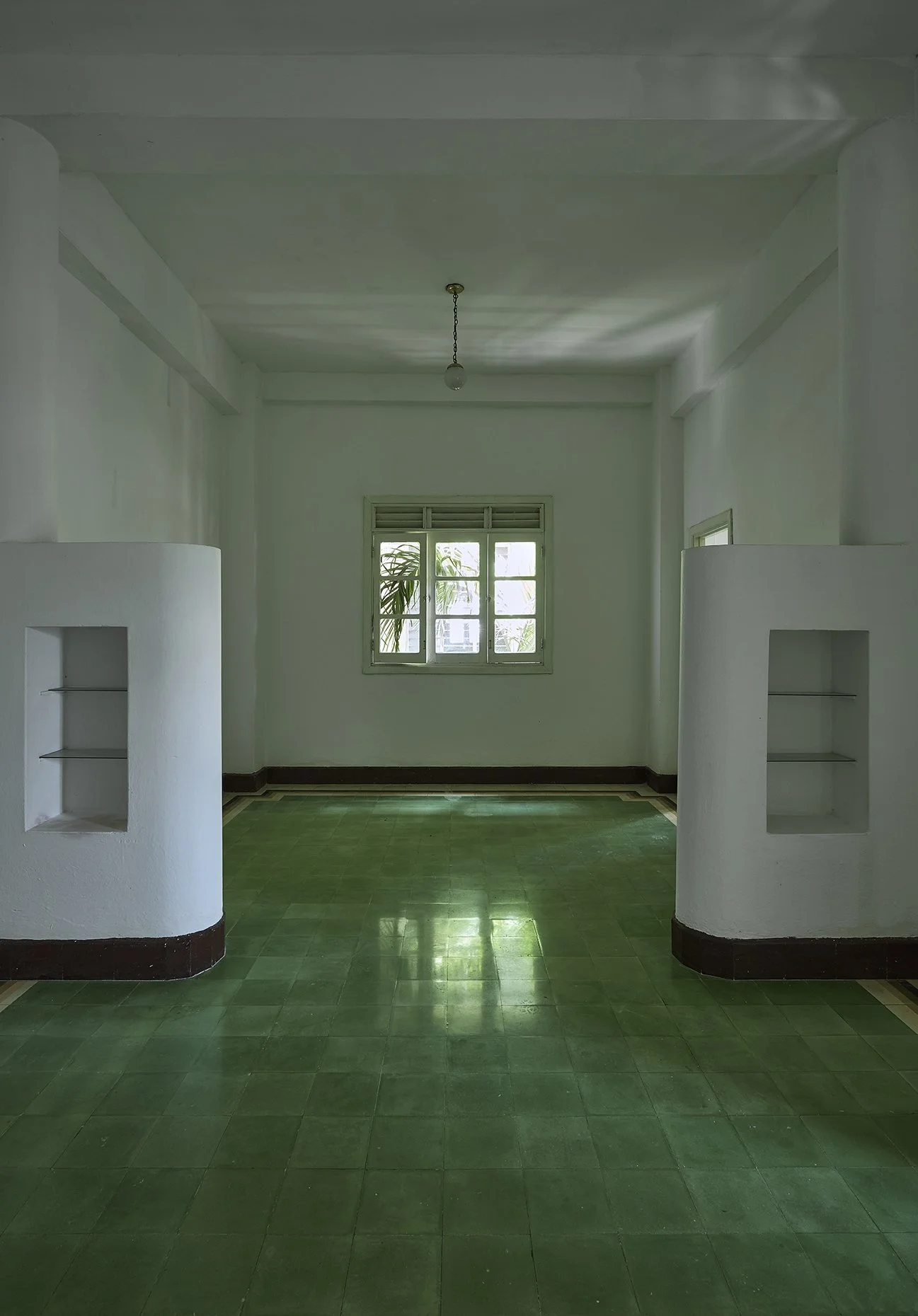
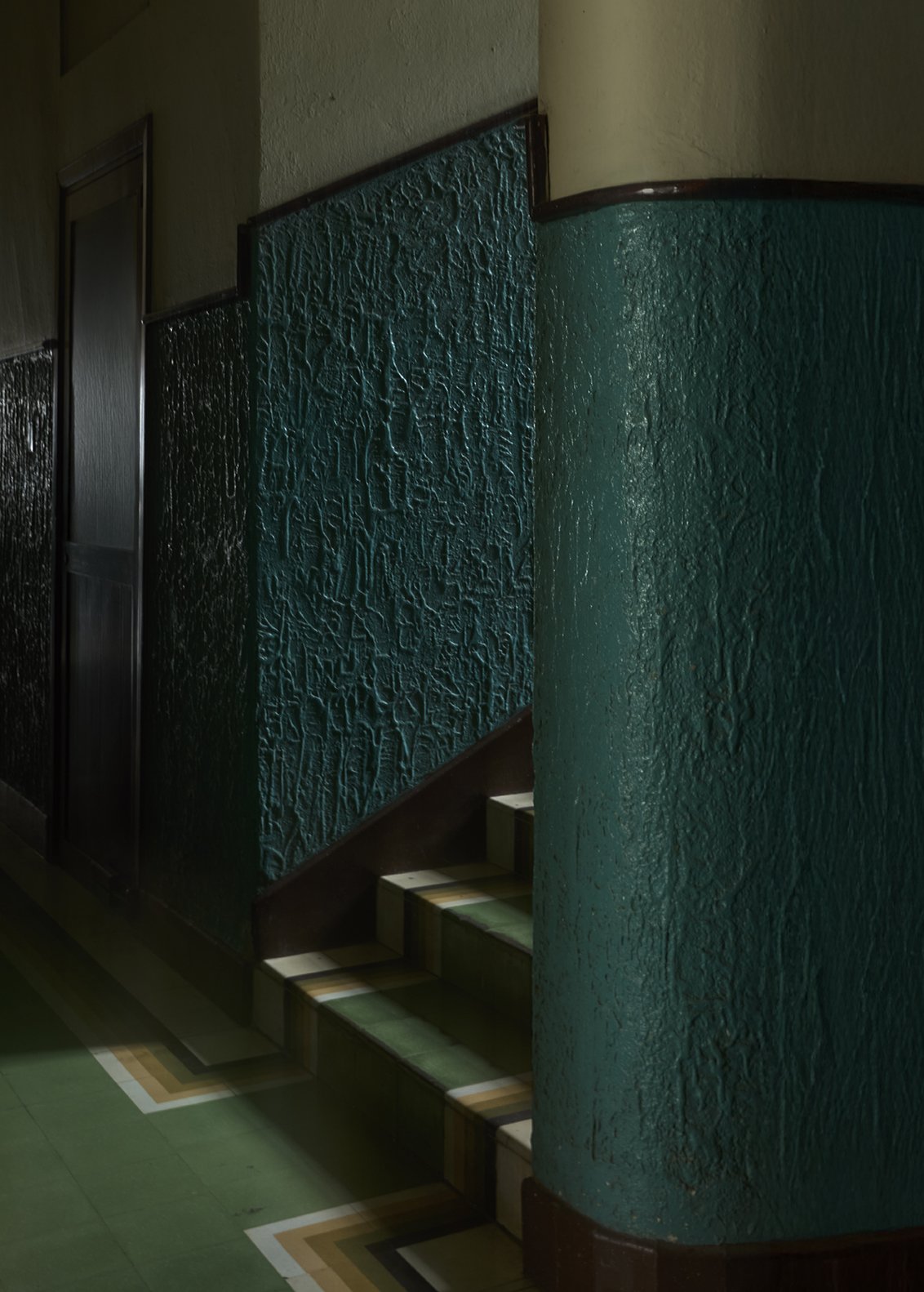
The García Building reflects this cultural moment. Its modernist language — clean lines, horizontal bands and modular repetition — speaks of international influence, yet its atmosphere is distinctly local. Deep balconies cast generous shadows onto the façade, softening the tropical glare and giving the structure a lived-in depth. The building seems designed not only to house commerce but to stage everyday urban life: conversations leaning over railings, open windows catching coastal breezes, the slow choreography of a working city.
Light plays a central role in its identity. As the sun shifts, the façade transforms — at times dense and graphic, at others porous and airy. This constant modulation lends the building a temporal quality, as if it were calibrated to the rhythm of the Caribbean day rather than to static monumentality.
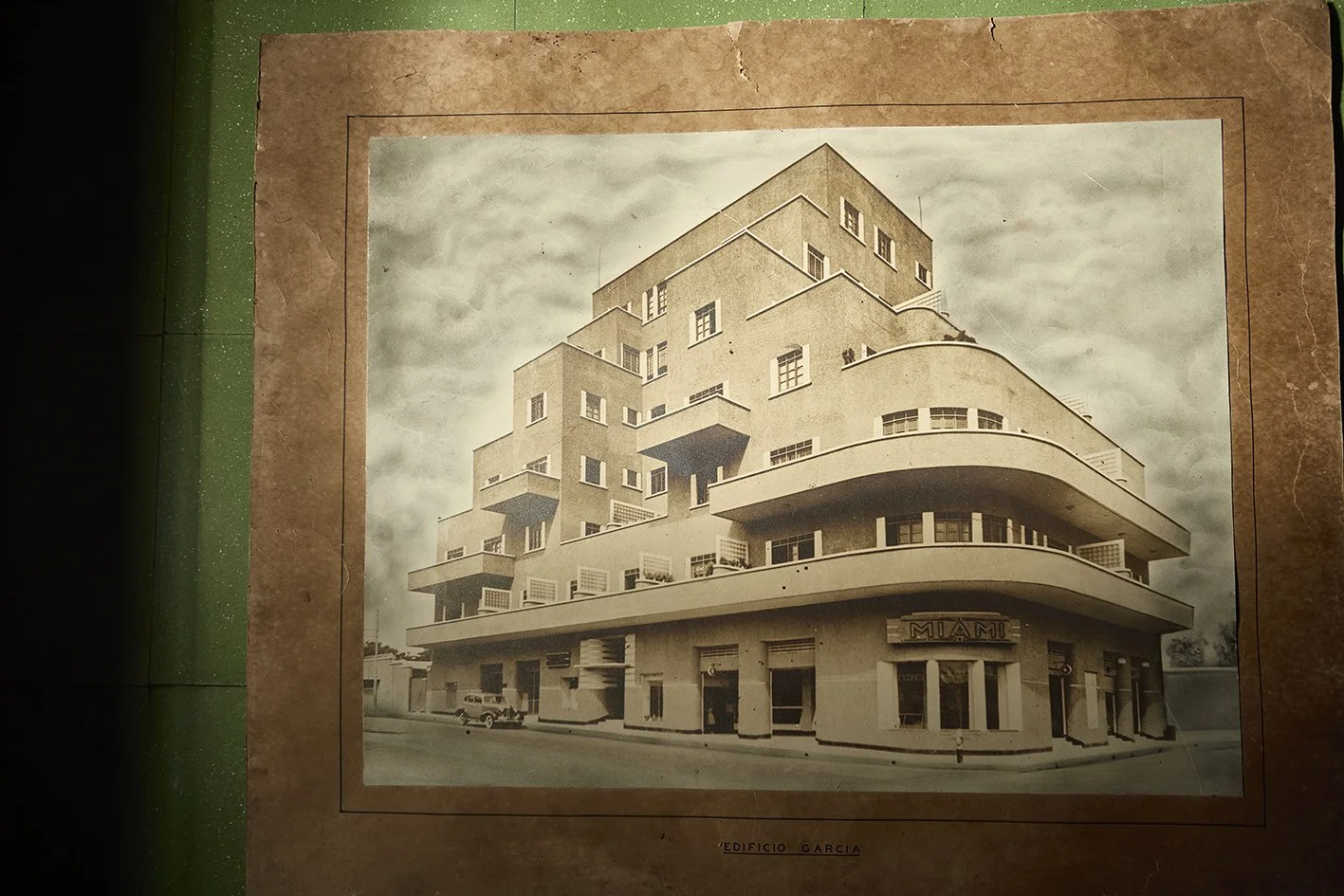
Like many commercial buildings of its era, documentation around its authorship remains partial. The project is widely attributed to the Cuban-born architect Manuel José Carrerá, whose work in Barranquilla helped translate international modernism into a vocabulary attuned to Caribbean climate and culture. His trajectory across the greater Caribbean basin situates the building within a broader network of architectural exchange, where European modernism was reinterpreted through heat, light and coastal urban life.

HUNTING THE SHADOW
How can a space be made beautiful? For Colombian architect Guillermo Arias, the question is less about style and more about the invisible dialogue between light, form, and material. Born in Bogotá in 1960, Arias belongs to a generation of thinkers who see architecture as both an intellectual pursuit and a poetic act — where geometry becomes language and light its most articulate verb.
Refractions and Reflections of Guillermo Arias’s Creative Mind
Curated by Mónica Barreneche

These large-scale, atypical geometric forms are characteristic of the work of Colombian architect Guillermo Arias.
Photo: Mónica Barreneche.
How can a space be made beautiful? For Colombian architect Guillermo Arias, the question is less about style and more about the invisible dialogue between light, form, and material. Born in Bogotá in 1960, Arias belongs to a generation of thinkers who see architecture as both an intellectual pursuit and a poetic act — where geometry becomes language and light its most articulate verb.

Guillermo Arias
The Architect as Alchemist
To understand Arias’s universe, one must first accept that architecture, for him, is a field of experimentation rather than repetition. Through his Bogotá-based studio Octubre, Arias has cultivated an approach rooted in curiosity, craftsmanship, and an almost spiritual fascination with proportion. His pieces — from monumental staircases and luminous niches to sculptural benches and hanging lamps — emerge as fragments of a larger idea: that the built world can serve as a passage into imagination.
Each object becomes a small architecture in itself, a model within which the user can mentally travel. The result is a body of work that oscillates between rigor and reverie, embracing imperfection as part of its truth.


The Grammar of Light
Light, in Arias’s practice, is not a mere afterthought — it is the raw matter that shapes everything. His architectural career has long revolved around how light hits a wall, spills over a stair, or becomes trapped in a polished surface. With Hunting the Shadow, Arias translates this obsession into a collection of collectible design pieces for La Casa Azul, the experimental platform of Bogotá’s NC Arte gallery.
Here, shadow becomes muse and medium. Marble blocks glow like captured embers; oxidized metals reveal their own patina of time; and recovered woods — their scars intact — turn into floating trees of light. The forms are deliberately asymmetric, their geometries slightly off-balance, challenging the bourgeois ideal of perfect symmetry.

With Hunting the Shadow, Arias translates this obsession into a collection of collectible design pieces for La Casa Azul, the experimental platform of Bogotá’s NC Arte gallery.

Pink Marble Desk Lamps, carved as amorphous stones, ignite when touched by artificial light, turning stone into fire.
The Substance of Memory
Arias’s work is as much about process as it is about outcome. Each lamp, bench, and table carries the weight of decades spent observing how materials behave — how marble fractures, how iron rusts, how wood bends when it meets humidity and heat. “Matter shouldn’t have a social class,” he says, insisting on using local granites and marbles as acts of cultural validation.
The Tree Lamp — suspended from ceiling to floor — reinterprets the geometry of growth in reclaimed wood. The Pink Marble Desk Lamps, carved as amorphous stones, ignite when touched by artificial light, turning stone into fire. Elsewhere, Imperial Black Marbles meet raw iron in bold contrasts, while the White Marble Benches rest delicately on wooden joints, their minimal gestures softening the industrial edge.


A Personal Lexicon of Design
At La Casa Azul, Arias’s objects form a landscape of personal archaeology — a map of ideas that connects architecture, art, and memory. The exhibition includes a large dining table that conceals its logic beneath its surface, and a curved metal bench that disguises its structural complexity behind apparent simplicity.
Every piece, every surface, seems to breathe with a certain rhythm — the rhythm of someone who has spent a lifetime listening to materials. “What we do,” he reflects, “is like interpreting a musical score. You can read the same notes, but each master decides how to play them.”

Guillermo Arias workshop
The Workshop and the Shadow
Beyond the gallery, Arias still spends long hours in his workshop in Bogotá’s Samper Mendoza district — a space filled with prototypes, marble dust, and unfinished ideas. There, surrounded by tools and light, he continues to blur the line between architecture and art, between the rational and the intuitive.
Born in Teusaquillo, raised by an engineer and astronomer father, Arias’s path was defined early by geometry and curiosity. After his studies at Universidad de los Andes and formative travels through Europe, he opened the first Octubre showroom, where experiments with Art-Deco mosaics and light installations began to shape his distinct visual grammar.
Decades later, Hunting the Shadow is less a retrospective than a revelation — a testament to how light, when crafted with care and courage, can transform not only matter but the way we perceive the world around us.


Geometry in Wood — The Quiet Sculptures of Diamantina & la Perla
Todo empieza con una idea.In the quiet of Montería’s workshop, the raw material meets restraint. Here, reforested oak becomes geometry—perfect spheres, subtle conical forms, and rings that balance volume and void. Diamantina & la Perla’s Geometric collection reads less like décor and more like a language: an economical lexicon of shape, weight and shadow.
In the quiet of Montería’s workshop, the raw material meets restraint. Here, reforested oak becomes geometry—perfect spheres, subtle conical forms, and rings that balance volume and void. Diamantina & la Perla’s Geometric collection reads less like décor and more like a language: an economical lexicon of shape, weight and shadow.


In an age of maximalism and ornamented surfaces, the Geometric series is resolute in its simplicity. Each piece is a meditation on form: the circle, the torus, the segment. In a single sweep of the lathe, the oak yields to something far more distilled than furniture or accessory—it becomes a statement. The hand-turned method leaves trace. Your eye follows the grain, notices a slight inflection, senses the maker’s presence.
The collection thrives on tension: between solid and void, scale and subtlety, mass and dematerialization. The sphere hovers lightly on a shelf. A torus frames an empty core, as much absence as presence. Together these objects curate negative space, giving interiors breathing room.

Material & Process
What feels elemental is in fact deeply constructed. The wood comes from reforestation projects in Montería, Colombia—local stewardship over distant sourcing. The workshop’s methodology emphasizes low waste and selective harvesting, ensuring the oak’s legacy is regenerative, not extractive.
Each form is achieved through a refined turning process. The lathe carves in continuum, yet pauses at micro-adjustments. The artisans coax texture and tone out of the oak, smoothing some surfaces to satin, leaving others slightly raw to emphasize the grain’s lineage. In the final stage, a matte natural oil brings out the depth of color without simulation—no lacquer gloss, no veneer disguise—just oak, turned, revealed.


